Books › Américains

Américains
First published 1959 · 189 pages
A restless, unvarnished visual road trip through the lonely, beating heart of mid-century America.
What it feels like
Flipping through these pages feels like riding shotgun on a cross-country road trip through the shadows of the 1950s. The experience is restless and meandering, inviting you to linger on grainy, off-kilter moments that capture the quiet desperation and stark beauty of everyday life. There is a profound loneliness soaking through the imagery, stripping away the glossy veneer of the post-war boom to reveal diners, highways, and faces marked by alienation and social divide. It is a deeply atmospheric journey, raw and unvarnished, where the visual storytelling speaks louder than words. This masterpiece will captivate lovers of the Beat Generation, street photography, and anyone who finds poetry in the gritty, unpolished margins of society.
- Mood
- restless
- gritty
- lonely
- haunting
- Tone
- observational
- melancholic
- unvarnished
- poetic
- Pace
- meandering
- Themes
- the myth of the American Dream · post-war alienation · transient encounters · beauty in the mundane · social divides
- The writing
- Visually raw and kinetic, utilizing stark contrasts, grainy textures, and unconventional framing to capture fleeting, unpolished truths.
- The arc
- Begins with a restless curiosity that slowly deepens into a profound, lingering sense of isolation and bittersweet clarity.
- Who it's for
- Readers and viewers drawn to the Beat Generation, street photography, and unflinching, atmospheric critiques of mid-century culture.
Content notes
- depictions of segregation
- poverty
- racism
About the book
From the Publisher: In 1958, the first edition of Robert Frank's The Americans was published in Paris. Les Americains contained Frank's 83 photographs in the same sequence as all subsequent editions, with the image on the right hand page, but juxtaposed with historical texts about American society and politics, gathered by Alain Bosquet. The following year, in the first American edition, the French texts were removed and an introduction by Jack Kerouac was added. Over the subsequent 50 years, The Americans has been republished in many editions, in numerous languages, with a variety of cover designs and even in a range of sizes. It is the most famous photography book ever published, and it changed the face of the medium forever. Robert Frank discussed with his publisher, Gerhard Steidl, the idea of producing a new edition using modern scanning and the finest tritone printing. The starting point was to bring original prints from New York to Gottingen, Germany, where Steidl is based. In July 2007, Frank visited Gottingen. A new format for the book was worked out and new typography selected. A new cover was designed and Frank chose the book cloth, foil for embossing and the endpaper. Most significantly, as he has done for every edition of The Americans, Frank changed the cropping of many of the photographs, usually including more information. Two images were changed completely from the original 1958 and 1959 editions.
Description from Open Library.
Books like Américains
See why they match Humans Of New YorkBrandon StantonA kaleidoscopic window into the souls of strangers that makes a sprawling metropolis feel intimately human.
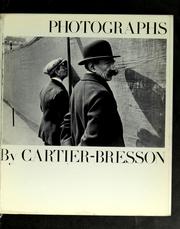 Photographs by Cartier-BressonHenri Cartier-BressonA quiet, masterful journey through the fleeting, poetic geometry of everyday human existence.
 Just KidsPatti SmithA tender, poetic elegy to a transformative friendship and the gritty, magical crucible of 1970s bohemian New York.
 KerouacAnn ChartersAn intimate, clear-eyed journey through the electric rise and tragic, alcohol-soaked fall of a restless literary icon.
 Vivian Maier, Street PhotographerVivian MaierA quiet, voyeuristic stroll through mid-century city streets, guided by the sharp eye of an unrecognized genius.
 The town and the cityJack KerouacA sweeping, nostalgic portrait of an American family fracturing as its sons leave the quiet certainty of their hometown for the restless energy of the city.