Books › Analysis for financial management

Analysis for financial management
First published 1983 · 464 pages
A pragmatic, demystifying journey through the mechanics of corporate finance that turns intimidating numbers into strategic power.
What it feels like
Reading this book feels like sitting down with a patient, highly experienced CFO who is determined to make you understand the mechanics of business. The pace is steady and deliberate, requiring focus as it builds a sturdy foundation of financial literacy. Instead of drowning the reader in academic theory, the atmosphere is distinctly pragmatic and professional, rooted in real-world application. The prose is refreshingly clear, stripping away intimidating jargon to reveal the logical machinery behind corporate decision-making. As you progress through the chapters, the initial apprehension of complex spreadsheets gives way to a satisfying, empowering sense of mastery. It is an essential, clarifying experience for non-financial executives and ambitious students who want to confidently speak the language of business.
- Mood
- analytical
- focused
- professional
- structured
- Tone
- authoritative
- pragmatic
- instructional
- clear
- objective
- Pace
- steady
- Themes
- financial literacy · strategic decision-making · risk assessment · value creation · corporate health
- The writing
- Direct, accessible, and highly structured, stripping away unnecessary jargon to focus on practical application.
- The arc
- Moves from the daunting complexity of raw financial data to an empowering sense of strategic clarity and mastery.
- Who it's for
- Non-financial executives, MBA students, and ambitious professionals looking to confidently navigate corporate finance.
About the book
Part I: Assessing the Financial Health of the Firm Chapter 1: Interpreting Financial Statements Chapter 2: Evaluating Financial Performance Appendix: International Differences in Financial Structure Part II: Planning Future Financial Performance Chapter 3: Financial Forecasting Chapter 4: Managing Growth Part III: Financing Operations Chapter 5: Financial Instruments and Markets Appendix: Forward Contracts, Options, and the Management of Corporate Risks Chapter 6: The Financing Decision Appendix: The Irrelevance Proposition Part IV: Evaluating investment Opportunities Chapter 7: Discounted Cash Flow Techniques Appendix Mutually Exclusive Alternatives and Capital Rationing Chapter 8: Risk Analysis in Investment Decisions Appendix: Diversification and ß-Risk Chapter 9: Business Valuation and Corporate Restructuring Appendix: The Venture Capital Method of Valuation Glossary Suggested Answers to Odd-Numbered End-of-Chapter Problems
Description from Open Library.
Books like Analysis for financial management
See why they match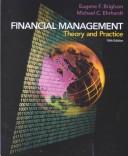 Financial ManagementEugene F. Brigham and Michael C. EhrhardtA rigorous, comprehensive immersion into the mechanics of corporate wealth creation and financial strategy.
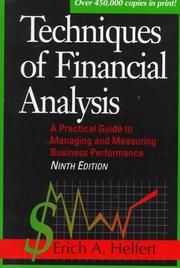 Techniques of financial analysisErich A. HelfertA rigorous, no-nonsense masterclass in decoding the financial mechanics that drive corporate success.
 Principles of corporate financeBrealey, Richard and Stewart C. Myers; MA rigorous, structured journey into the mechanics of value, risk, and corporate decision-making.
 Fundamentals of corporate financeRichard A. BrealeyA rigorous, structured journey into the mechanics of money, risk, and corporate decision-making.
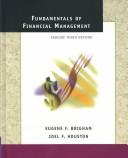 Fundamentals of financial managementBrighamA methodical, clear-eyed demystification of corporate finance that turns daunting numbers into a logical language.
 Modern portfolio theory and investment analysisEdwin J. EltonA rigorous, structured deep dive into the mechanics of financial markets and investment strategy.