Books › Animal physiology

Animal physiology
1008 pages
A rigorous, deeply informative exploration of the biological machinery that allows animals to survive and thrive across the globe.
What it feels like
Reading this is like stepping into a brightly lit, meticulously organized laboratory. The pace is steady and deliberate, demanding focus as it builds a comprehensive architecture of biological knowledge. Rather than a narrative journey, the experience is one of intellectual accumulation, where the objective, academic tone guides you through the astonishing mechanics of life. The mood is clinical yet quietly awe-inspiring, transforming everyday animals into marvels of evolutionary engineering and physiological adaptation. The prose is precise and didactic, prioritizing absolute clarity over stylistic flourish. It is a deeply satisfying text for dedicated science students and deeply curious naturalists who want to move beyond surface-level nature facts and truly understand the complex, hidden machinery that sustains life on Earth.
- Mood
- intellectual
- clinical
- structured
- wonder-struck
- Tone
- authoritative
- objective
- academic
- inquisitive
- Pace
- steady
- Themes
- evolutionary adaptation · mechanics of survival · form and function · biological resilience
- The writing
- The writing is precise, didactic, and meticulously structured, prioritizing scientific clarity and comprehensive detail.
- The arc
- The reader journeys from basic curiosity about animal life to a profound, structured awe at the intricate mechanics of survival.
- Who it's for
- Biology students and dedicated science enthusiasts who crave a rigorous, deep-dive understanding of how organisms function and adapt.
Content notes
- clinical descriptions of animal anatomy
- discussions of animal mortality
About the book
Includes bibliographies and index. Rev. ed. of: Comparative physiology of animals / Richard W. Hill. 1976.
Description from Open Library.
Books like Animal physiology
See why they match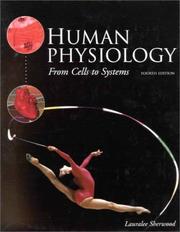 Human PhysiologyLauralee SherwoodA rigorous, methodical exploration of the human body's biological mechanics, from the microscopic to the macroscopic.
 Principles of Human PhysiologyCindy L. StanfieldA rigorous, structured journey through the intricate biological machinery that keeps us alive.
 Comparative anatomy of the vertebratesKent,GeorgeA rigorous, structural tour through the evolutionary blueprints of the animal kingdom.
 PhysicsJoseph W. KaneA rigorous, methodical journey through the fundamental laws of nature, tailored for those studying the life sciences.
 Guyton and Hall textbook of medical physiologyJohn E. HallAn authoritative, comprehensive deep dive into the intricate mechanics of the human body.
 Exercise physiologyWilliam D. McArdleA rigorous, comprehensive deep dive into the biological machinery of human movement and athletic potential.