Books › Architectural Geometry

Architectural Geometry
744 pages
An illuminating, structured exploration of how mathematical principles shape the physical spaces we build.
What it feels like
Reading this book feels like stepping into a well-lit, meticulously organized design studio where the boundaries between mathematics and art dissolve. The pace is steady and methodical, guiding the reader from the foundational basics of geometric modeling straight to the cutting edge of architectural research. Its tone is highly instructive yet surprisingly accessible, taking complex topics like differential geometry and mesh processing and translating them into clear, practical tools for physical design. The mood is deeply intellectual and structured, appealing to a mind that finds beauty in proportion and optimization. It is a perfect companion for architecture students, industrial designers, and engineers who want to master the hidden mathematical elegance behind complex, freeform structures.
- Mood
- intellectual
- structured
- innovative
- Tone
- instructive
- analytical
- accessible
- authoritative
- Pace
- steady
- Themes
- the intersection of math and art · structural problem-solving · translating theory into physical form · the elegance of complex shapes
- The writing
- Clear, methodical, and highly educational, designed to translate dense mathematical concepts into easily understandable architectural applications.
- The arc
- A journey from foundational understanding to the confident mastery of complex, cutting-edge spatial concepts.
- Who it's for
- Architecture students, industrial designers, and construction engineers looking to bridge the gap between applied geometry and physical design.
About the book
Geometry lies at the core of the architectural design process. It is omnipresent, from the initial form-finding stages to the actual construction. Modern constructive geometry provides a variety of tools for the efficient design, analysis, and manufacture of complex shapes. This results in new challenges for architecture. However, the architectural application also poses new problems to geometry. Architectural geometry is therefore an entire research area, currently emerging at the border between applied geometry and architecture. This book has been written as a textbook for students of architecture or industrial design. It comprises material at all levels, from the basics of geometric modeling to the cutting edge of research. During the architectural journey through geometry, topics typically reserved for a mathematically well-trained audience are addressed in an easily understandable way. These include central concepts on freeform curves and surfaces, differential geometry, kinematic geometry, mesh processing, digital reconstruction, and optimization of shapes. This book is also intended as a geometry consultant for architects, construction engineers, and industrial designers and as a source of inspiration for scientists interested in applications of geometry processing in architecture and art.
Description from Open Library.
Books like Architectural Geometry
See why they match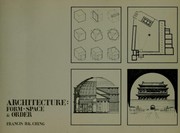 Architecture, form, space & orderChing, Francis D. K.A masterclass in seeing the built world, blending meticulous hand-drawn illustrations with the fundamental grammar of space.
 101 things I learned in architecture schoolMatthew FrederickA minimalist, pocket-sized mentor that demystifies the creative process of shaping the spaces around us.
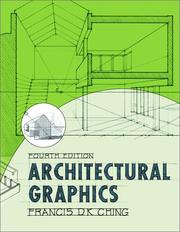 Architectural GraphicsFrancis D. K. ChingA calm, methodical guide to the tactile tools and surfaces that form the foundation of architectural drawing.
 The Timeless Way of BuildingChristopher AlexanderA meditative journey into the soul of architecture that reveals how spaces can feel as natural and alive as the people who inhabit them.
 How to drawScott RobertsonA rigorous, empowering masterclass that transforms the daunting blank page into a structured playground of precise, imaginative forms.
 ArchitectureClois E. KicklighterA methodical, deeply practical guide that transforms abstract spatial ideas into concrete, buildable realities.