Books › Architecture, form, space & order

Architecture, form, space & order
First published 1979 · 464 pages
A masterclass in seeing the built world, blending meticulous hand-drawn illustrations with the fundamental grammar of space.
What it feels like
Reading this book feels like putting on a new pair of glasses that suddenly brings the built environment into sharp, magnificent focus. It is a steady, contemplative experience, driven less by narrative and more by the rhythmic interplay of the author's iconic hand-lettered text and his meticulous, elegant line drawings. The mood is serene and deeply analytical, inviting you to slow down and truly look at how lines, planes, and volumes interact to create the spaces we inhabit. The prose is sparse but profound, acting as a gentle guide through the universal grammar of design. It will absolutely delight architecture students, artists, and anyone who has ever walked into a room and wondered why it feels so perfectly balanced.
- Mood
- contemplative
- structured
- serene
- inspiring
- Tone
- analytical
- reverent
- precise
- educational
- clear
- Pace
- steady
- Themes
- visual literacy · spatial harmony · the language of design · human-environment connection · structural elegance
- The writing
- Hand-lettered, concise, and deeply integrated with meticulous line drawings, prioritizing clarity and visual flow.
- The arc
- Moves from a foundational curiosity about the built environment to a profound, structured appreciation of spatial harmony.
- Who it's for
- Architecture students, designers, and visually-minded thinkers who want to understand the invisible rules governing the spaces around them.
About the book
The Second Edition of this classic introduction to the principles of architecture is everything you would expect from the celebrated architect, author, and illustrator, Francis D. K. Ching. Each page has been meticulously revised to incorporate contemporary examples of the principles of form, space, and order - the fundamental vocabulary of every designer. The result is a beautifully illustrated volume that embraces today's forms and looks at conventional models with a fresh perspective.
Here, Ching examines every principal of architecture, juxtaposing images that span centuries and cross cultural boundaries to create a design vocabulary that is both elemental and timeless. Among the topics covered are point, line, plane, volume, proportion, scale, circulation, and the interdependence of form and space.
While this revision continues to be a comprehensive primer on the ways form and space are interrelated and organized in the shaping of our environment, it has been refined to amplify and clarify concepts. In addition, the Second Edition contains numerous new hand-rendered drawings; expanded section on openings and scale; examples of contemporary architectural design elements; expanded chapter on design principles; new glossary and index categorized by the author; and new 8 1/2 x 11 upright trim.
In the Second Edition of Architecture: Form, Space, and Order, the author has opted for a larger format and crisper images. Mr. Ching has retained the style of his hand-lettered text, a hallmark of each of his books. This rich source of architectural prototypes, each rendered in Mr. Ching's signature style, also serves as a guide to architectural drawing.
Doubtless, many will want this handsome volume for the sheer beauty of it. Architects and students alike will treasure this book for its wealth of practical information and its precise illustrations. Mr. Ching has once again created a visual reference that illuminates the world of architectural form.
Description from Open Library.
Books like Architecture, form, space & order
See why they match Building Construction IllustratedFrancis D. K. ChingA precise and structured exploration of the materials, technologies, and codes that bring architectural designs to life.
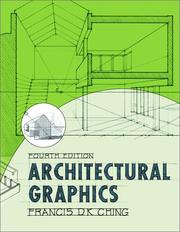 Architectural GraphicsFrancis D. K. ChingA calm, methodical guide to the tactile tools and surfaces that form the foundation of architectural drawing.
 101 things I learned in architecture schoolMatthew FrederickA minimalist, pocket-sized mentor that demystifies the creative process of shaping the spaces around us.
 Architectural GeometryHelmut Pottmann, Andreas Asperl and othersAn illuminating, structured exploration of how mathematical principles shape the physical spaces we build.
 Notes on the synthesis of formChristopher AlexanderA deeply analytical and philosophical exploration of how design and aesthetics shape the structures around us.
 The Timeless Way of BuildingChristopher AlexanderA meditative journey into the soul of architecture that reveals how spaces can feel as natural and alive as the people who inhabit them.