Books › Bad Samaritans

Bad Samaritans
288 pages
A witty, myth-busting tour through economic history that turns everything you thought you knew about free trade upside down.
What it feels like
Reading this book feels like sitting down with a brilliant, slightly subversive professor who is determined to pull back the curtain on how the global economy actually works. The pace is surprisingly brisk for a book about international trade, propelled by the author's wry humor and knack for deploying startling historical facts to dismantle entrenched orthodoxies. The mood is urgent yet deeply accessible, replacing the dry, intimidating atmosphere of traditional economics with an eye-opening clarity. Chang's prose is conversational and sharp, stripping away jargon to expose the hypocrisies of wealthy nations. It is an intellectually exhilarating experience, perfect for readers who crave a fresh, historically grounded perspective on globalization and want to understand the real mechanics of wealth, poverty, and power.
- Mood
- intellectually stimulating
- urgent
- eye-opening
- Tone
- provocative
- accessible
- wry
- authoritative
- critical
- Pace
- brisk
- Themes
- the myth of the free market · historical amnesia · global inequality · economic hypocrisy · the mechanics of wealth and poverty
- The writing
- Clear, conversational, and peppered with witty historical anecdotes that dismantle complex economic jargon.
- The arc
- Moves from a sense of frustration at global hypocrisy to an empowering clarity about how economies actually develop.
- Who it's for
- Readers who suspect the standard narrative of global capitalism is flawed and want a readable, historically grounded explanation of why.
Content notes
- systemic inequality
- poverty
About the book
A radical look by a leading economist at the issues surrounding globalization...It's rare that a book appears with a fresh perspective on world affairs, but renowned economist Ha-Joon Chang has some startlingly original things to say about the future of globalization. In theory, he argues, the world's wealthiest countries and supra-national institutions like the IMF, World Bank and WTO want to see all nations developing into modern industrial societies. In practice, though, those at the top are 'kicking away the ladder' to wealth that they themselves climbed. Why? Self-interest certainly plays a part. But, more often, rich and powerful governments and institutions are actually being 'Bad Samaritans': their intentions are worthy but their simplistic free-market ideology and poor understanding of history leads them to inflict policy errors on others. Chang demonstrates this by contrasting the route to success of economically vibrant countries with the very different route now being dictated to the world's poorer nations. In the course of this, he shows just how muddled the thinking is in such key areas as trade and foreign investment. He shows that the case for privatisation and against state involvement is far from proven. And he explores the ways in which attitudes to national cultures and political ideologies are obscuring clear thinking and creating bad policy. Finally, he argues the case for new strategies for a more prosperous world that may appall the 'Bad Samaritans'.
Description from Open Library.
Books like Bad Samaritans
See why they match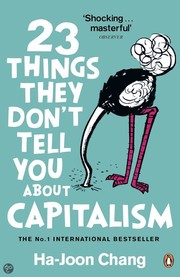 23 things they don't tell you about capitalismHa-Joon ChangA sharp, accessible myth-busting journey that pulls back the curtain on the invisible rules governing our economic lives.
 Economics : the user's guideHa-Joon ChangA friendly, jargon-busting toolkit that transforms the intimidating world of global finance into an accessible, empowering conversation.
 Profit over PeopleNoam ChomskyA clear-eyed, uncompromising dismantling of corporate power that ultimately champions the enduring hope of grassroots resistance.
 The bottom billionPaul CollierA sobering yet pragmatic deep dive into the structural traps that keep the world's poorest nations from thriving.
 How Asia WorksJoe StudwellA paradigm-shifting masterclass that dismantles Western economic myths to reveal the gritty, pragmatic blueprints of national prosperity.
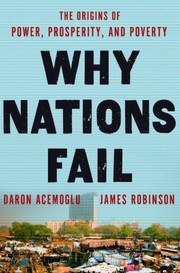 Why Nations FailDaron Acemoglu and James A. RobinsonA sweeping, intellectually rigorous journey through history that decodes the hidden machinery of global inequality.