Books › The bottom billion

The bottom billion
why the poorest countries are failing and what can be done about it
First published 2007 · 224 pages
A sobering yet pragmatic deep dive into the structural traps that keep the world's poorest nations from thriving.
What it feels like
Reading this book feels like sitting in a masterclass with a deeply knowledgeable, impassioned professor who refuses to let you succumb to despair. The pace is steady and deliberate, carefully laying out complex economic and political realities without ever becoming bogged down in impenetrable academic jargon. The mood is undeniably sobering as it confronts the stark realities of civil war, corruption, and geographic misfortune, yet it remains intellectually stimulating and ultimately driven by a cautious, pragmatic hope. The prose is clear, persuasive, and accessible, designed to translate data into urgent moral imperatives. It will deeply satisfy readers who crave data-driven analysis over sentimental appeals, offering a clear-eyed framework for understanding and potentially solving the most stubborn inequities of our globalized world.
- Mood
- sobering
- intellectually stimulating
- urgent
- cautiously hopeful
- Tone
- analytical
- impassioned
- pragmatic
- urgent
- authoritative
- Pace
- steady
- Themes
- systemic inequality · mechanics of poverty · global responsibility · structural traps · pragmatic solutions
- The writing
- Clear, accessible, and persuasive, translating complex economic data into compelling, readable arguments.
- The arc
- Moves from a sobering confrontation with intractable global poverty to a pragmatic, cautiously optimistic framework for actionable change.
- Who it's for
- Readers interested in global affairs, economics, and effective altruism who want data-driven solutions rather than purely emotional appeals.
Content notes
- extreme poverty
- civil war
- systemic corruption
About the book
"In this elegant and impassioned synthesis from one of the world's leading experts on Africa and poverty, economist Paul Collier writes persuasively that although nearly five billion of the world's people are beginning to climb from desperate poverty and to benefit from globalization's reach to developing countries, there is a "bottom billion" of the world's poor whose countries, largely immune to the forces of global economy, are falling farther behind and are in danger of falling apart, separating permanently and tragically from the rest of the world. Collier identifies and explains the four traps that prevent the homelands of the world's billion poorest people from growing and receiving the benefits of globalization - civil war, the discovery and export of natural resources in otherwise unstable economies, being landlocked and therefore unable to participate in the global economy without great cost, and finally, ineffective governance. As he demonstrates that these billion people are quite likely in danger of being irretrievably left behind, Collier argues that we cannot take a "headless heart" approach to these seemingly intractable problems; rather, that we must harness our despair and our moral outrage at these inequities to a reasoned and thorough understanding of the complex and interconnected problems that the world's poorest people face." -- Publisher's description.
Description from Open Library.
Books like The bottom billion
See why they match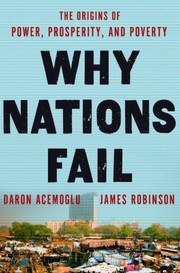 Why Nations FailDaron Acemoglu and James A. RobinsonA sweeping, intellectually rigorous journey through history that decodes the hidden machinery of global inequality.
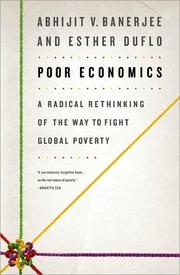 Poor EconomicsEsther DufloA pragmatic, deeply empathetic exploration of how the world's poorest people actually live and make decisions, replacing dogma with data.
 The life you can savePeter SingerA rigorously logical yet deeply humane challenge to rethink what it means to live an ethical life.
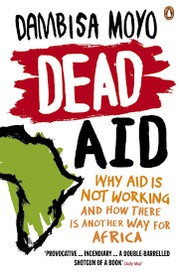 Dead aidDambisa MoyoA provocative and analytical dismantling of the traditional approach to international relief.
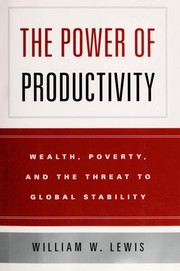 The Power of ProductivityWilliam W. LewisA clear-eyed, data-driven autopsy of global economic inequality and a pragmatic blueprint for structural change.
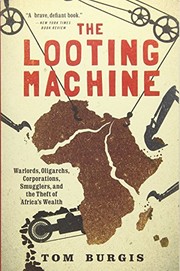 The looting machineTom BurgisA sobering, urgent investigation into the systemic exploitation that keeps a resource-rich continent economically precarious.