Books › Behave

Behave
The Biology of Humans at Our Best and Worst
1024 pages
A witty, mind-expanding journey backward through time to uncover the biological and environmental roots of our greatest triumphs and darkest impulses.
What it feels like
Reading this book feels like sitting in on a masterclass taught by your favorite, most eccentric professor. It is a massive, steady climb through the layers of human behavior, demanding your attention but rewarding it with constant, mind-expanding epiphanies. Sapolsky's conversational, often irreverent prose acts as a trusty guide through dense thickets of neurobiology, endocrinology, and evolutionary psychology. The mood is deeply inquisitive and occasionally sobering, as it strips away the illusion of simple choices to reveal the staggering machinery behind our best and worst moments. It will delight intellectually ravenous readers who crave a unified, empathetic understanding of human nature, leaving them looking at themselves and everyone around them with a newfound, awe-struck grace.
- Mood
- intellectually stimulating
- mind-expanding
- sobering
- awe-inspiring
- Tone
- witty
- conversational
- authoritative
- empathetic
- irreverent
- Pace
- steady
- Themes
- the complexity of human nature · roots of violence and compassion · the illusion of free will · us versus them dynamics · biology meeting environment
- The writing
- Sapolsky writes with a disarming, conversational wit that makes dense neurobiology feel like a fascinating chat with a brilliant, slightly eccentric professor.
- The arc
- Begins with a sense of overwhelming biological complexity and resolves into a profound, empathetic grace for human frailty.
- Who it's for
- Deeply curious readers who love having their assumptions challenged and want a unified theory of human behavior that bridges hard science and sociology.
Content notes
- discussions of violence
- war and genocide
- racism and xenophobia
- animal experimentation
- trauma
About the book
Why do we do the things we do?
Over a decade in the making, this game-changing book is Robert Sapolsky's genre-shattering attempt to answer that question as fully as perhaps only he could, looking at it from every angle. Sapolsky's storytelling concept is delightful but it also has a powerful intrinsic logic: he starts by looking at the factors that bear on a person's reaction in the precise moment a behavior occurs, and then hops back in time from there, in stages, ultimately ending up at the deep history of our species and its genetic inheritance.
And so the first category of explanation is the neurobiological one. What goes on in a person's brain a second before the behavior happens? Then he pulls out to a slightly larger field of vision, a little earlier in time: What sight, sound, or smell triggers the nervous system to produce that behavior? And then, what hormones act hours to days earlier to change how responsive that individual is to the stimuli which trigger the nervous system? By now, he has increased our field of vision so that we are thinking about neurobiology and the sensory world of our environment and endocrinology in trying to explain what happened.
Sapolsky keeps going--next to what features of the environment affected that person's brain, and then back to the childhood of the individual, and then to their genetic makeup. Finally, he expands the view to encompass factors larger than that one individual. How culture has shaped that individual's group, what ecological factors helped shape that culture, and on and on, back to evolutionary factors thousands and even millions of years old.
The result is one of the most dazzling tours de horizon of the science of human behavior ever attempted, a majestic synthesis that harvests cutting-edge research across a range of disciplines to provide a subtle and nuanced perspective on why we ultimately do the things we do...for good and for ill. Sapolsky builds on this understanding to wrestle with some of our deepest and thorniest questions relating to tribalism and xenophobia, hierarchy and competition, morality and free will, and war and peace. Wise, humane, often very funny, Behave is a towering achievement, powerfully humanizing, and downright heroic in its own right.
Description from Open Library.
Books like Behave
See why they match DeterminedRobert M. SapolskyA witty, paradigm-shattering deep dive into the biology of behavior that dismantles the illusion of free will and rebuilds a foundation for radical empathy.
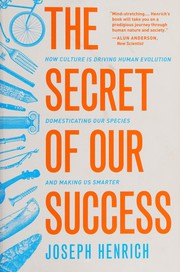 The secret of our successJoseph Patrick HenrichA paradigm-shifting exploration that dismantles the myth of the lone genius to reveal the true superpower of our species: our collective brain.
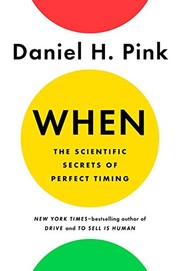 WhenDaniel H. PinkAn energizing, data-driven exploration that turns the abstract concept of time into a tangible tool for a better life.
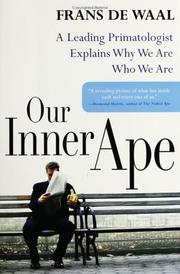 Our Inner ApeFrans de WaalA hopeful, scientifically grounded exploration of the primate heritage that shapes both our darkest impulses and our highest moral capacities.
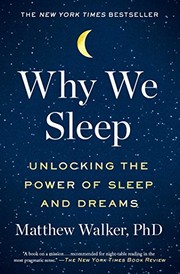 Why We SleepMatthew WalkerA fascinating, slightly terrifying wake-up call about the biological superpower we take for granted every single night.
 Chimpanzee PoliticsFrans de WaalA fascinating look into the Machiavellian power struggles and social dynamics of our closest evolutionary relatives.