Books › Our Inner Ape

Our Inner Ape
First published 2005 · 326 pages
A hopeful, scientifically grounded exploration of the primate heritage that shapes both our darkest impulses and our highest moral capacities.
What it feels like
Reading this book feels like taking a fascinating, perspective-shifting walk through the evolutionary family tree. The pace is steady and thoughtful, guiding the reader through the contrasting worlds of the aggressive chimpanzee and the gentle, erotic bonobo. It cultivates an intellectually stimulating and ultimately hopeful mood, challenging the cynical caricature of Darwinian evolution as purely ruthless. The prose is clear and engaging, translating complex comparative psychology into accessible insights about the duality of human nature. It moves gracefully from acknowledging our violent streaks to celebrating our innate capacities for empathy, fairness, and altruism. This is a perfect read for those who love science and psychology, offering a deeply reassuring look at the biological roots of our noblest qualities.
- Mood
- intellectually stimulating
- hopeful
- reflective
- Tone
- informative
- provocative
- optimistic
- thoughtful
- Pace
- steady
- Themes
- evolutionary origins of morality · duality of human nature · animal behavior and psychology · roots of empathy and aggression
- The writing
- Clear and engaging, translating complex comparative psychology into compelling, accessible observations.
- The arc
- Moves from a stark acknowledgment of our violent tendencies to a hopeful understanding of our inherent capacity for kindness.
- Who it's for
- Readers fascinated by evolutionary biology, psychology, and the deeper roots of human nature.
Content notes
- discussions of animal aggression
- mentions of violence and brutality
- references to animal sexual behavior
About the book
It's no secret that humans and apes share a host of traits, from the tribal communities we form to our irrepressible curiosity. We have a common ancestor, scientists tell us, so it's natural that we act alike. But not all of these parallels are so appealing: the chimpanzee, for example, can be as vicious and manipulative as any human.Yet there's more to our shared primate heritage than just our violent streak. In Our Inner Ape, Frans de Waal, one of the world's great primatologists and a renowned expert on social behavior in apes, presents the provocative idea that our noblest qualities—generosity, kindness, altruism—are as much a part of our nature as are our baser instincts. After all, we share them with another primate: the lesser-known bonobo. As genetically similar to man as the chimpanzee, the bonobo has a temperament and a lifestyle vastly different from those of its genetic cousin. Where chimps are aggressive, territorial, and hierarchical, bonobos are gentle, loving, and erotic (sex for bonobos is as much about pleasure and social bonding as it is about reproduction).While the parallels between chimp brutality and human brutality are easy to see, de Waal suggests that the conciliatory bonobo is just as legitimate a model to study when we explore our primate heritage. He even connects humanity's desire for fairness and its morality with primate behavior, offering a view of society that contrasts markedly with the caricature people have of Darwinian evolution. It's plain that our finest qualities run deeper in our DNA than experts have previously thought.Frans de Waal has spent the last two decades studying our closest primate relations, and his observations of each species in Our Inner Ape encompass the spectrum of human behavior. This is an audacious book, an engrossing discourse that proposes thought-provoking and sometimes shocking connections among chimps, bonobos, and those most paradoxical of apes, human beings.
Description from Open Library.
Books like Our Inner Ape
See why they match The Bonobo and the AtheistHenry Cabot Lodge (Jr.)A warm, scientifically grounded exploration that finds the roots of human goodness not in the heavens, but in the earth and our primate cousins.
 Chimpanzee PoliticsFrans de WaalA fascinating look into the Machiavellian power struggles and social dynamics of our closest evolutionary relatives.
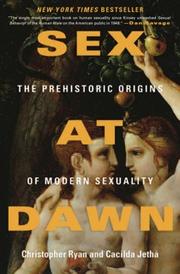 Sex at DawnChristopher RyanA witty, paradigm-shifting exploration of human evolution that gleefully dismantles the standard narrative of natural monogamy.
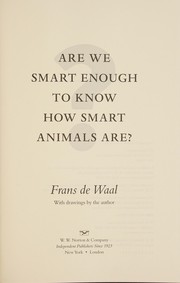 Are We Smart Enough to Know How Smart Animals Are?Frans de WaalA mind-expanding journey that dismantles human arrogance and replaces it with a profound awe for the hidden genius of the natural world.
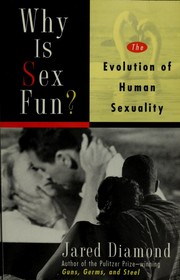 Why Is Sex Fun?Jared M. DiamondA witty, eye-opening biological safari into the weirdest mating habits in the animal kingdom: our own.
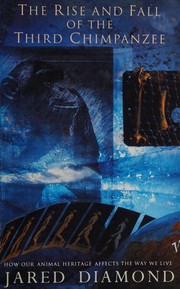 The Third ChimpanzeeJared M. DiamondA fascinating, slightly humbling mirror held up to humanity, revealing the wild animal lurking just beneath our civilized veneer.