Books › Botany

Botany
First published 1991 · 925 pages
A rigorous, grounding journey into the microscopic and macroscopic architecture of the green world.
What it feels like
Reading this comprehensive text feels like stepping into a well-lit, quiet laboratory. The pacing is methodical and steady, carefully building a towering understanding of plant life from the microscopic cellular level up to sweeping, interconnected ecological systems. It does not rush; instead, it invites the reader to sit with complex diagrams and dense, informative prose that deeply rewards patient study. The mood is grounded and highly intellectual, stripping away poetic romanticism to reveal the awe-inspiring, mechanical brilliance of genetics, physiology, and evolution. Perfect for the dedicated student or the deeply curious naturalist, this foundational experience transforms a casual glance at a forest or garden into a profound appreciation for the silent, complex machinery of the natural world.
- Mood
- intellectual
- grounded
- observant
- structured
- Tone
- academic
- authoritative
- objective
- methodical
- Pace
- steady
- Themes
- the architecture of nature · scientific inquiry · evolutionary adaptation · interconnected ecosystems
- The writing
- Clear, didactic, and highly structured, prioritizing scientific precision and educational clarity over stylistic flourish.
- The arc
- Moves from foundational curiosity to a profound, structured appreciation of complex biological systems.
- Who it's for
- Dedicated biology students, avid gardeners, and nature enthusiasts seeking a rigorous, scientific understanding of plant life.
About the book
This text covers the fundamentals of plant science, including structure, genetics and evolution, physiology and development, and ecology. The text also contains information on molecular biology, plant biotechnology, and coverage of taxonomy and phylogeny of plants.--adapted from back cover.
Description from Open Library.
Books like Botany
See why they match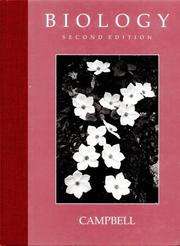 BiologyNeil A. CampbellA monumental, structured journey through the mechanics of life that transforms overwhelming complexity into awe-inspiring clarity.
 BiologyKaren ArmsA grounded, comprehensive exploration of the mechanics of life, scaling from the invisible cell to the vastness of global ecosystems.
 Biology of plantsPeter H. RavenA rigorous, illuminating deep dive into the structural and evolutionary marvels of the botanical world.
 BiologySylvia S. MaderA structured, comprehensive journey through the mechanics of life, from the microscopic cell to the vast, interconnected biosphere.
 Campbell biologyJane B. ReeceAn authoritative, meticulously structured exploration of the foundational principles of life.
 Principles of seed science and technologyLawrence O. CopelandA comprehensive, straightforward exploration of the biological and technological life of seeds.