Books › Calling Bullshit

Calling Bullshit
352 pages
A witty, empowering toolkit for cutting through the noise of a data-drenched world.
What it feels like
Reading this book feels like sitting down with two brilliant, slightly irreverent professors who are determined to pull back the curtain on the modern information landscape. The pace is brisk and engaging, moving swiftly through real-world examples of bad charts, skewed statistics, and manipulative headlines. Instead of leaving you drowning in the dread of a post-truth society, the atmosphere is deeply empowering and intellectually stimulating. The prose is conversational, stripping away academic jargon to make complex data analysis accessible to anyone. It is a clear-eyed, pragmatic experience that transforms the overwhelming noise of the internet into a manageable puzzle. This is the perfect read for curious skeptics and news junkies who want to navigate the digital age with confidence and a sharply tuned BS detector.
- Mood
- empowering
- intellectually stimulating
- clear-eyed
- Tone
- wry
- authoritative
- accessible
- irreverent
- pragmatic
- Pace
- brisk
- Themes
- intellectual self-defense · the weaponization of data · navigating the information age · media literacy
- The writing
- Conversational and sharp, translating complex statistical concepts into punchy, highly readable prose.
- The arc
- Transitions from the overwhelming dread of a post-truth world to the sharp, confident clarity of a well-equipped skeptic.
- Who it's for
- Curious skeptics, news junkies, and anyone exhausted by manipulative charts, graphs, and 'science says' headlines.
Content notes
- discussions of political misinformation
About the book
Bullshit isn’t what it used to be. Now, two science professors give us the tools to dismantle misinformation and think clearly in a world of fake news and bad data.
Misinformation, disinformation, and fake news abound and it’s increasingly difficult to know what’s true. Our media environment has become hyperpartisan. Science is conducted by press release. Startup culture elevates bullshit to high art. We are fairly well equipped to spot the sort of old-school bullshit that is based in fancy rhetoric and weasel words, but most of us don’t feel qualified to challenge the avalanche of new-school bullshit presented in the language of math, science, or statistics. In Calling Bullshit, Professors Carl Bergstrom and Jevin West give us a set of powerful tools to cut through the most intimidating data.
You don’t need a lot of technical expertise to call out problems with data. Are the numbers or results too good or too dramatic to be true? Is the claim comparing like with like? Is it confirming your personal bias? Drawing on a deep well of expertise in statistics and computational biology, Bergstrom and West exuberantly unpack examples of selection bias and muddled data visualization, distinguish between correlation and causation, and examine the susceptibility of science to modern bullshit.
We have always needed people who call bullshit when necessary, whether within a circle of friends, a community of scholars, or the citizenry of a nation. Now that bullshit has evolved, we need to relearn the art of skepticism.
Description from Open Library.
Books like Calling Bullshit
See why they match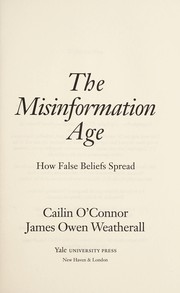 The misinformation ageCailin O'ConnorAn analytical deep dive into the social machinery that allows false beliefs to thrive in the modern world.
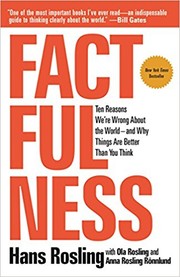 FactfulnessHans Rosling, Ola Rosling and othersA data-driven antidote to doomscrolling that replaces global anxiety with grounded, rational hope.
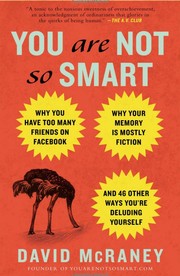 You are not so smartDavid McRaneyA playful, humbling tour through the cognitive biases that secretly run your life, proving that you are delightfully, predictably irrational.
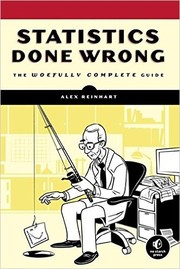 Statistics Done WrongAlex ReinhartA pithy, eye-opening guide that transforms the dread of statistical errors into empowering methodological clarity.
 On BullshitHarry G. FrankfurtA deadpan, razor-sharp philosophical dissection of why people talk without caring about the truth.
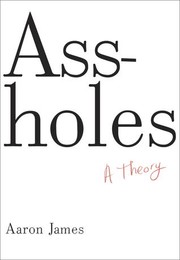 AssholesAaron JamesA cathartic, intellectually rigorous field guide to understanding and surviving the most entitled people in your life.