Books › Catherine the Great

Catherine the Great
927 pages
A sweeping, immersive portrait of a brilliant outsider who willed herself into becoming an empire.
What it feels like
Reading this biography feels like stepping into the opulent, high-stakes world of the eighteenth-century Russian court. Massie crafts a deeply immersive and empathetic portrait that reads with the sweeping momentum of a classic historical novel. The atmosphere is grand and intellectually stimulating, balancing the glittering excess of the Winter Palace with the heavy, often isolating burden of absolute power. You are seated right beside a brilliant, ambitious woman as she transforms from a vulnerable outsider into a formidable ruler, wrestling constantly with the friction between her Enlightenment ideals and the harsh realities of her empire. It is a steady, richly detailed journey that will thoroughly delight readers who crave character-driven history, offering a majestic blend of political intrigue, personal drama, and sheer human willpower.
- Mood
- grand
- immersive
- opulent
- intellectual
- Tone
- authoritative
- empathetic
- sweeping
- admiring
- Pace
- steady
- Themes
- burden of power · self-invention · political maneuvering · idealism vs. reality · court intrigue
- The writing
- Richly detailed and elegantly narrative, reading with the sweeping momentum of a classic historical novel.
- The arc
- Moves from the anxious isolation of a young outsider to the commanding, complex confidence of an absolute ruler.
- Who it's for
- Readers who crave deeply immersive, character-driven history that explores the human behind the crown.
Content notes
- political violence
- war
- infidelity
- illness
About the book
The author of Peter the Great, Nicholas and Alexandra, and The Romanovs returns with another masterpiece of narrative biography, the extraordinary story of an obscure young German princess who traveled to Russia at fourteen and rose to become one of the most remarkable, powerful, and captivating women in history. Born into a minor noble family, Catherine transformed herself into Empress of Russia by sheer determination. Possessing a brilliant mind and an insatiable curiosity as a young woman, she devoured the works of Enlightenment philosophers and, when she reached the throne, attempted to use their principles to guide her rule of the vast and backward Russian empire. She knew or corresponded with the preeminent historical figures of her time: Voltaire, Diderot, Frederick the Great, Empress Maria Theresa of Austria, Marie Antoinette, and, surprisingly, the American naval hero, John Paul Jones. Reaching the throne fired by Enlightenment philosophy and determined to become the embodiment of the "benevolent despot" idealized by Montesquieu, she found herself always contending with the deeply ingrained realities of Russian life, including serfdom. She persevered, and for thirty-four years the government, foreign policy, cultural development, and welfare of the Russian people were in her hands. She dealt with domestic rebellion, foreign wars, and the tidal wave of political change and violence churned up by the French Revolution that swept across Europe. Her reputation depended entirely on the perspective of the speaker. She was praised by Voltaire as the equal of the greatest of classical philosophers; she was condemned by her enemies, mostly foreign, as "the Messalina of the north." Catherine's family, friends, ministers, generals, lovers, and enemies -- all are here, vividly described. These included her ambitious, perpetually scheming mother; her weak, bullying husband, Peter (who left her lying untouched beside him for nine years after their marriage); her unhappy son and heir, Paul; her beloved grandchildren; and her "favorites" -- the parade of young men from whom she sought companionship and the recapture of youth as well as sex. Here, too, is the giant figure of Gregory Potemkin, her most significant lover and possible husband, with whom she shared a passionate correspondence of love and separation, followed by seventeen years of unparalleled mutual achievement. The story is superbly told. All the special qualities that Robert K. Massie brought to Nicholas and Alexandra and Peter the Great are present here: historical accuracy, depth of understanding, felicity of style, mastery of detail, ability to shatter myth, and a rare genius for finding and expressing the human drama in extraordinary lives. History offers few stories richer in drama than that of Catherine the Great. In this book, this eternally fascinating woman is returned to life. - Publisher.
Description from Open Library.
Books like Catherine the Great
See why they match Peter the GreatRobert K. MassieA sweeping, scrutinizing journey through the forceful modernization of an empire.
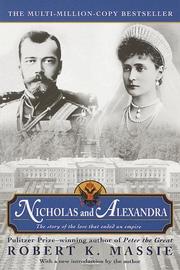 Nicholas and AlexandraRobert K. MassieA sweeping, dread-soaked tapestry of an empire's collapse, viewed through the intimate, tragic lens of a doomed family's fatal devotion.
 Catherine la GrandeHenri TroyatA comprehensive and authoritative journey through the life and reign of a powerful historical empress.
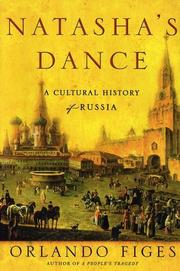 Natasha's DanceOrlando FigesA sweeping, deeply textured journey into the soul of a nation, told through the artists, peasants, and dreamers who shaped it.
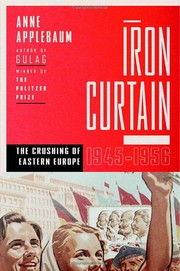 Iron CurtainAnne ApplebaumA chilling, meticulously detailed descent into the mechanics of totalitarianism and the suffocating reality of life under absolute state control.
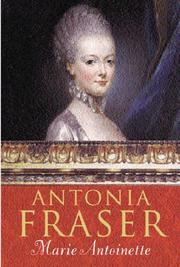 Marie AntoinetteAntonia FraserA deeply empathetic and immersive biographical journey that dismantles the legend of a doomed queen to reveal the complex woman beneath.