Books › Consciousness

Consciousness
an introduction
First published 2003 · 618 pages
A dizzying, rigorous dismantling of everything you thought you knew about your own mind and sense of self.
What it feels like
Reading this feels like stepping into a late-night philosophical debate that slowly unravels your fundamental sense of reality. It is a steady, deeply inquisitive journey that takes the most intimate thing you possess, your own awareness, and places it under a rigorous scientific microscope. The mood is highly contemplative and occasionally dizzying, as the text systematically dismantles comfortable assumptions about free will, identity, and the illusion of the self. Despite the heavy cognitive science and philosophical weight, the prose remains remarkably lucid and conversational, guiding you through complex thought experiments without losing you in academic jargon. It is a mind-expanding experience perfectly suited for armchair philosophers and curious skeptics who delight in having their worldview turned inside out.
- Mood
- mind-expanding
- contemplative
- existential
- curious
- Tone
- inquisitive
- provocative
- accessible
- analytical
- Pace
- steady
- Themes
- the illusion of self · the mind-body problem · limits of perception · free will and determinism
- The writing
- Lucid and highly structured, translating dense neurological and philosophical concepts into engaging, conversational thought experiments.
- The arc
- Begins with everyday curiosity and gradually descends into a profound, slightly dizzying existential questioning of one's own reality.
- Who it's for
- Armchair philosophers and science enthusiasts who love having their fundamental assumptions about reality challenged.
Content notes
- existential dread
- discussions of brain injury
About the book
Consciousness', 'the last great mystery for science', remains a hot topic. How can a physical brain create our experience of the world? What creates our identity? Do we really have free will? Could consciousness itself be an illusion? Exciting new developments in brain science are continuing the debates on these issues, and the field has now expanded to include biologists, neuroscientists, psychologists, and philosophers. This controversial book clarifies the potentially confusing arguments, and the major theories, whilst also outlining the amazing pace of discoveries in neuroscience. Covering areas such as the construction of self in the brain, mechanisms of attention, the neural correlates of consciousness, and the physiology of altered states of consciousness, Susan Blackmore highlights our latest findings.
Description from Open Library.
Books like Consciousness
See why they match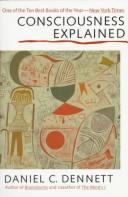 Consciousness explainedDaniel C. DennettA witty, relentless dismantling of the ghost in the machine that will leave you questioning who is actually doing the reading.
 ConsciousAnnaka HarrisA brief, mind-bending plunge into the deepest mystery of the universe: the fact that you are experiencing it at all.
 The origin of consciousness in the breakdown of the bicameral mindJulian JaynesA sweeping, deeply unsettling, and awe-inspiring journey into the ancient mind that will forever change how you hear your own internal monologue.
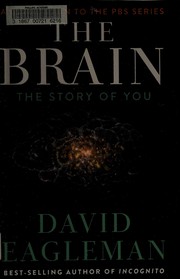 The brainDavid EaglemanA mind-expanding journey into the dark, silent fortress of the skull to discover how biological matter constructs our entire reality.
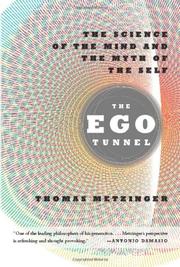 The ego tunnelThomas MetzingerA radical, mind-bending philosophical journey that dismantles the illusion of the self.
 How Emotions Are MadeLisa Feldman BarrettA paradigm-shifting journey into the brain that dismantles everything you thought you knew about human feeling.