Books › Consciousness explained

Consciousness explained
First published 1991 · 528 pages
A witty, relentless dismantling of the ghost in the machine that will leave you questioning who is actually doing the reading.
What it feels like
Reading this book feels like stepping into a brilliantly lit, slightly disorienting laboratory of the mind. The author serves as a confident, witty guide, systematically dismantling your deepest intuitions about what it means to have a self. The pace is steady and methodical, demanding your full attention as it weaves through thought experiments, optical illusions, and cognitive science. It is an intellectually exhilarating experience, though occasionally vertigo-inducing, as the comfortable notion of a central observer is replaced by a chaotic, fascinating swarm of neurological drafts. This is a feast for the relentlessly curious readers who delight in having their worldview turned inside out and who prefer the messy, mechanical truth of biology over the comforting illusions of the soul.
- Mood
- intellectually stimulating
- inquisitive
- mind-bending
- Tone
- provocative
- witty
- confident
- conversational
- analytical
- Pace
- steady
- Themes
- the illusion of the self · mechanics of the mind · evolution of thought · dismantling intuition
- The writing
- Lucid, playful, and rich with thought experiments, blending rigorous philosophy with accessible metaphors.
- The arc
- Moves from the comfortable certainty of everyday experience into a disorienting, exhilarating deconstruction of the self.
- Who it's for
- Curious skeptics and armchair philosophers who enjoy having their fundamental assumptions about reality and selfhood challenged.
Content notes
- existential themes
About the book
This book revises the traditional view of consciousness by claiming that Cartesianism and Descartes' dualism of mind and body should be replaced with theories from the realms of neuroscience, psychology and artificial intelligence. What people think of as the stream of consciousness is not a single, unified sequence, the author argues, but "multiple drafts" of reality composed by a computer-like "virtual machine". Dennett considers how consciousness could have evolved in human beings and confronts the classic mysteries of consciousness: the nature of introspection, the self or ego and its relation to thoughts and sensations, and the level of consciousness of non-human creatures.
Description from Open Library.
Books like Consciousness explained
See why they match From Bacteria to Bach and Back: The Evolution of MindsDaniel C. DennettA sweeping, cerebral exploration of how mindless biological processes gave rise to the breathtaking complexity of human consciousness.
 ConsciousnessSusan BlackmoreA dizzying, rigorous dismantling of everything you thought you knew about your own mind and sense of self.
 The ego tunnelThomas MetzingerA radical, mind-bending philosophical journey that dismantles the illusion of the self.
 The Mind's IDouglas R. HofstadterA dizzying, playful funhouse mirror of thought experiments that will make you question the very nature of your own existence.
 Darwin's dangerous ideaDaniel C. DennettAn intellectually dizzying journey that uses a single biological concept to dismantle and rebuild your understanding of meaning itself.
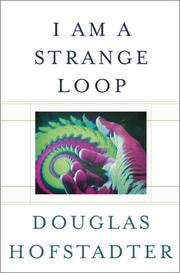 I Am a Strange LoopDouglas R. HofstadterA mind-bending, deeply personal journey into the architecture of consciousness that reveals how we live on inside the minds of those we love.