Books › Economics

Economics
First published 1966 · 992 pages
A rigorous, foundational journey into the mechanics of human choice and the invisible forces shaping global markets.
What it feels like
Reading this book feels like being handed the blueprints to the modern world. It is a deeply structured, intellectual experience that demands a steady, deliberate pace, rewarding the reader with sudden moments of clarity about how society functions. The atmosphere is pragmatic and academic, stripped of emotional bias to focus purely on the mechanics of choice, scarcity, and market dynamics. The prose is methodical and lucid, guiding you step-by-step through complex models with the help of clear examples and diagrams. It is a deeply satisfying read for the intellectually curious, those who want to move beyond political rhetoric and understand the actual gears turning the global economy, leaving you with a profound sense of analytical empowerment.
- Mood
- intellectual
- structured
- pragmatic
- Tone
- academic
- objective
- analytical
- authoritative
- Pace
- steady
- Themes
- systems thinking · rational choice · market dynamics · resource allocation
- The writing
- Methodical and lucid, prioritizing clarity and logical progression over stylistic flourish.
- The arc
- Moves from initial curiosity about everyday transactions to a profound, structured comprehension of global economic forces.
- Who it's for
- Curious minds and dedicated students who want to understand the invisible gears turning the modern world.
About the book
Microfilm. Washington, D.C.: Library of Congress Photoduplication Service, 1988. 1 microfilm reel; 35 mm. "Portions of this work were first published in the United Kingdom as An introduction to positive economics, (e.g., [copyright]) 1963 by Richard G. Lipsey." Call number of original: HB171.5.L733 1981. Master microform held by: DLC.
Description from Open Library.
Books like Economics
See why they match An introduction to positive economicsRichard G. LipseyA rigorous, clarifying journey into the mechanics of human choice and the invisible systems that govern our world.
 Economics, an introductory analysisSAMUELSON,A rigorous, foundational journey that transforms the chaotic noise of global markets into a structured, comprehensible system of incentives and forces.
 Principles of Microeconomics (with Xtra!)N. Gregory MankiwA clear, structured lens that transforms the chaotic everyday world into a series of logical trade-offs and incentives.
 Principles of EconomicsN. Gregory MankiwA clarifying, structured lens that suddenly brings the chaotic gears of human behavior and global markets into sharp focus.
 MacroeconomicsRichard T. FroyenA rigorous, historically grounded journey through the evolution of macroeconomic thought and the mechanics of global economies.
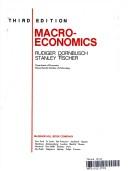 MacroeconomicsRudiger Dornbusch and Stanley FischerA methodical and authoritative exploration of the forces that shape large-scale economic systems.