Books › Principles of Economics

Principles of Economics
First published 1998 · 892 pages
A clarifying, structured lens that suddenly brings the chaotic gears of human behavior and global markets into sharp focus.
What it feels like
Reading this book feels like putting on a new pair of glasses that suddenly brings the chaotic, overlapping systems of the modern world into sharp, mathematical focus. It is a deeply pragmatic and structured experience, moving at a steady, deliberate pace that allows complex concepts to settle and click into place. The prose is famously lucid, stripping away intimidating academic jargon in favor of relatable, real-world analogies that make the invisible forces of supply, demand, and human incentive feel tangible. There is a distinct intellectual satisfaction in its pages, a shift from viewing society as a random series of events to seeing it as a fascinating web of trade-offs and rational choices. It delights the curious, analytical reader who craves a foundational understanding of how the world actually works.
- Mood
- intellectual
- structured
- pragmatic
- illuminating
- Tone
- authoritative
- accessible
- objective
- pedagogical
- clear
- Pace
- steady
- Themes
- rational decision-making · hidden incentives · societal trade-offs · market mechanics · the architecture of choice
- The writing
- Unusually lucid and conversational for a textbook, breaking down complex mathematical and social concepts into digestible, real-world analogies.
- The arc
- Moves from a sense of overwhelming global complexity to a satisfying, grounded clarity about how the world operates.
- Who it's for
- Curious minds and students seeking a foundational, jargon-free understanding of the forces that shape our daily lives and global societies.
About the book
The word economy comes from the Greek word oikonomos, which means "one who manages a household."
Description from Open Library.
Books like Principles of Economics
See why they match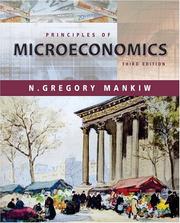 Principles of Microeconomics (with Xtra!)N. Gregory MankiwA clear, structured lens that transforms the chaotic everyday world into a series of logical trade-offs and incentives.
 MacroeconomicsRudiger Dornbusch and Stanley FischerA methodical and authoritative exploration of the forces that shape large-scale economic systems.
 Basic economicsThomas SowellA masterclass in stripping away political rhetoric to reveal the hidden, often counterintuitive gears that drive human societies.
 The undercover economist strikes backTim HarfordA witty, jargon-free tour through the hidden gears of the global economy that makes macroeconomics feel like a fascinating dinner party conversation.
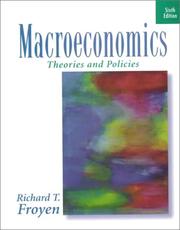 MacroeconomicsRichard T. FroyenA rigorous, historically grounded journey through the evolution of macroeconomic thought and the mechanics of global economies.
 Environmental economicsBarry C. FieldA methodical, scholarly exploration of the intersection between economic development and environmental policy.