Books › Fermat's last theorem

Fermat's last theorem
Unlocking the Secret of an Ancient Mathematical Problem
First published 1996 · 175 pages
A fast-paced intellectual detective story that spans centuries, turning abstract mathematics into a thrilling human drama of obsession and triumph.
What it feels like
Reading this book feels like unearthing a centuries-old treasure map where the landmarks are ideas rather than geography. It moves with a brisk, propulsive energy, transforming what could be a dry academic history into a gripping intellectual detective story. The narrative atmosphere is steeped in curiosity and awe, inviting you into the minds of brilliant, often obsessed individuals separated by centuries but united by a single, maddening puzzle. The prose is remarkably clear and accessible, stripping away the intimidation of high-level mathematics to reveal the elegant, almost artistic beauty of logic beneath. It is a deeply satisfying experience that delights curious thinkers and history buffs, offering the profound emotional payoff of watching human ingenuity finally conquer an impossible mountain.
- Mood
- intellectually stimulating
- curious
- awe-inspiring
- Tone
- accessible
- reverent
- suspenseful
- informative
- Pace
- brisk
- Themes
- intellectual obsession · the pursuit of truth · cumulative human knowledge · the beauty of logic
- The writing
- Clear, engaging, and journalistic, translating complex mathematical concepts into an accessible narrative without losing their inherent elegance.
- The arc
- Moves from a sense of ancient mystery and historical frustration to a triumphant, awe-inspiring resolution of a centuries-old puzzle.
- Who it's for
- Curious minds who love historical detective stories and want to experience the thrill of mathematical discovery without needing a degree in calculus.
About the book
In 1995, a Princeton-based mathematician showed up at a scientific conference and dropped a bombshell. He had succeeded in deciphering one of mathematics' great secrets, one that thousands had puzzled over for the last three-and-a-half centuries: he had proven Fermat's Last Theorem in a 200-page paper, one that took seven years to write (and another year to fine tune).
Fermat's Last Theorem is the previously untold story of the people, the history, and the cultures that lie behind this scientific triumph.
Written by a seventeenth-century French scholar, the deceptively simple-sounding theorem states that while the square of a whole number can be broken down into two other squares of whole numbers - for example, five squared (25) equals four squared (16) plus three squared (nine) - the same cannot be done with cubes or any higher powers. After Fermat's death, many spent lifetimes trying to prove the theorem.
The theorem has ancient roots. Around 2000 B.C., the Babylonians sought a way to break down a squared number into a sum of two squares. In the sixth century B.C., the Greek mathematician Pythagoras incorporated this concept into his own famous theorem, paving the way for Fermat.
Centuries after Fermat, in 1955, two Japanese mathematicians made a far-reaching, almost fantastic conjecture about a possible relation between two disparate branches of mathematics. It was their work that enabled Princeton researcher Andrew Wiles, forty years later, to piece together the logic necessary to prove Fermat's Last Theorem. Fermat's Last Theorem combines philosophy and hard science with investigative journalism to make for a real-life detective story of the intellect.
Description from Open Library.
Books like Fermat's last theorem
See why they match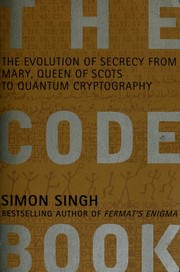 The Code BookSimon SinghA thrilling intellectual treasure hunt through history that reveals the invisible mathematical wars fought in the shadows.
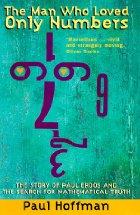 The Man Who Loved Only NumbersPaul HoffmanA warm, energetic portrait of a brilliant, chaotic mind that makes the abstract world of mathematics feel deeply human.
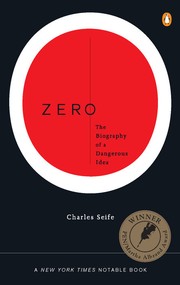 ZeroCharles SeifeA dizzying, delightful journey through history and physics that makes the concept of nothingness feel like the most thrilling thing in the universe.
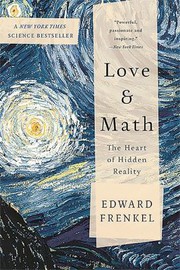 Love and MathEdward FrenkelA passionate love letter to the hidden, artistic beauty of the universe, wrapped in a story of personal resilience.
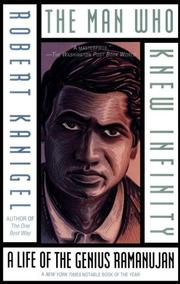 The Man Who Knew InfinityRobert KanigelA deeply moving portrait of raw genius and the profound, tragic collision of two vastly different worlds united by the language of mathematics.
 Is God a mathematician?Mario LivioA contemplative journey through history and logic that asks whether the universe is fundamentally built on numbers.