Books › Finite and infinite games
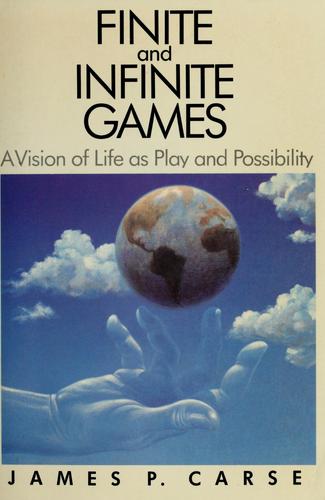
Finite and infinite games
First published 1986 · 256 pages
A quiet, paradigm-shifting meditation that dissolves the boundaries of how you perceive success, struggle, and existence itself.
What it feels like
Reading this book feels like stepping out of a crowded, noisy room into a vast, open landscape. It is a steady, meditative experience built on aphoristic prose that demands you pause and let the concepts settle. The text doesn't argue; it simply presents a profound reframing of human existence, shifting the mood from the claustrophobia of daily competition to an expansive, serene sense of possibility. You will find yourself putting it down frequently, not out of boredom, but because a single sentence has triggered a cascade of personal reflection. It delights philosophical seekers, burnt-out overachievers, and quiet rebels who are ready to stop playing to win and start playing to keep the game alive.
- Mood
- expansive
- meditative
- paradigm-shifting
- Tone
- contemplative
- aphoristic
- authoritative
- serene
- Pace
- steady
- Themes
- the nature of play · boundaries vs. horizons · existential freedom · the illusion of winning · continuous creation
- The writing
- Aphoristic and precise, delivering dense philosophical concepts with poetic brevity.
- The arc
- Begins with a clinical deconstruction of societal rules and gradually opens into a profound, liberating sense of limitless possibility.
- Who it's for
- Philosophical seekers, strategists, and anyone feeling trapped by the rat race who wants to fundamentally reframe how they engage with life.
About the book
Finite games are the familiar contests of everyday life, the games we play in business and politics, in the bedroom and on the battlefield — games with winners and losers, a beginning and an end. Infinite games are the more mysterious — and ultimately more rewarding. They are unscripted and unpredictable; they are the source of true freedom.
from the back cover of the 1986 edition.
Description from Open Library.
Books like Finite and infinite games
See why they match Homo LudensHuizingaA profound, erudite journey that reframes the entire history of human civilization through the lens of a game.
 Theory of Fun for Game DesignRaph KosterA playful, illustrated journey into the cognitive science of why we play, turning the abstract concept of fun into a tangible, fascinating science.
 What technology wantsKevin KellyA sweeping, optimistic reframing of technology as a living, evolving force deeply intertwined with human destiny.
 The Clock of the Long NowStewart BrandA mind-expanding invitation to step off the treadmill of the present and breathe in the stabilizing scale of deep time.
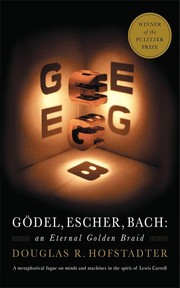 Gödel, Escher, BachDouglas R. HofstadterA dizzying, playful labyrinth of logic, art, and music that fundamentally rewires how you think about thinking.
 Skin in the GameNassim Nicholas TalebA combative, intellectually restless dismantling of modern expertise that demands you put your own neck on the line.