Books › Gödel, Escher, Bach

Gödel, Escher, Bach
An Eternal Golden Braid
First published 1979 · 928 pages
A dizzying, playful labyrinth of logic, art, and music that fundamentally rewires how you think about thinking.
What it feels like
Reading this book feels like wandering through an intellectual funhouse designed by a mad genius. It is a deeply meandering, cerebral journey that demands immense patience, rewarding the reader with mind-expanding epiphanies about the nature of consciousness and reality. The prose constantly shifts gears, moving seamlessly from rigorous mathematical proofs to whimsical, Lewis Carroll-inspired dialogues between Achilles and the Tortoise. Every chapter is layered with intricate puns, recursive structures, and hidden symmetries that make the act of reading feel like solving a magnificent puzzle. It is an awe-inspiring, labyrinthine experience that will utterly delight intellectually omnivorous readers, lovers of paradoxes, and anyone fascinated by the mysterious emergence of meaning from the raw mechanics of the universe.
- Mood
- cerebral
- labyrinthine
- awe-inspiring
- curious
- Tone
- playful
- erudite
- whimsical
- philosophical
- wry
- Pace
- meandering
- Themes
- the nature of consciousness · self-reference and recursion · emergence of meaning · the beauty of formal systems · interconnectedness of disciplines
- The writing
- A wildly inventive blend of rigorous academic exposition, Lewis Carroll-esque dialogues, intricate puns, and structural wordplay.
- The arc
- Begins with playful curiosity, descends into dizzying intellectual disorientation, and resolves in a profound, lingering awe at the architecture of the mind.
- Who it's for
- Intellectually omnivorous puzzle-solvers who delight in deep, challenging explorations of philosophy, mathematics, and the origins of human thought.
About the book
A metaphorical fugue on minds and machines in the spirit of Lewis Carroll
Douglas Hofstadter's book is concerned directly with the nature of "maps" or links between formal systems. However, according to Hofstadter, the formal system that underlies all mental activity transcends the system that supports it. If life can grow out of the formal chemical substrate of the cell, if consciousness can emerge out of a formal system of firing neurons, then so too will computers attain human intelligence. Gödel, Escher, Bach is a wonderful exploration of fascinating ideas at the heart of cognitive science: meaning, reduction, recursion, and much more.
Description from Open Library.
Books like Gödel, Escher, Bach
See why they match I Am a Strange LoopDouglas R. HofstadterA mind-bending, deeply personal journey into the architecture of consciousness that reveals how we live on inside the minds of those we love.
 The Mind's IDouglas R. HofstadterA dizzying, playful funhouse mirror of thought experiments that will make you question the very nature of your own existence.
 Is God a mathematician?Mario LivioA contemplative journey through history and logic that asks whether the universe is fundamentally built on numbers.
 The society of mindVoyager CompanyA playful, mind-bending puzzle box that dismantles the illusion of the self to reveal the hidden machinery of thought.
 Our Mathematical UniverseMax TegmarkA dizzying, enthusiastic plunge into the radical idea that the cosmos isn't just described by math, but is made of it.
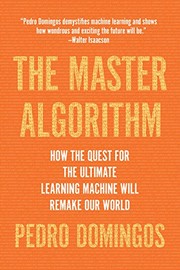 The Master AlgorithmPedro DomingosA visionary, intellectually thrilling safari through the hidden logic that powers our modern world and promises to reshape our future.