Books › Freakonomics
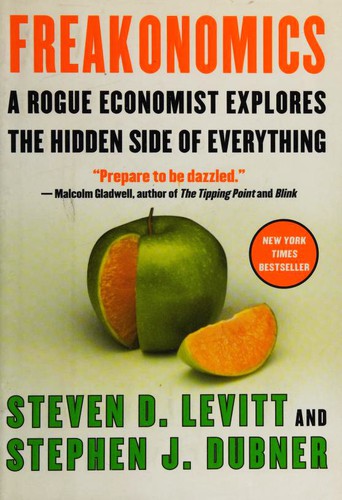
Freakonomics
First published 2006 · 476 pages
A playful, data-driven dismantling of conventional wisdom that makes you question everything you thought you knew about how the world works.
What it feels like
Reading this book feels like sitting next to the smartest, most provocative person at a dinner party. It moves at a brisk, episodic pace, leaping effortlessly from the inner workings of a crack gang to the hidden biases of real estate agents. The tone is wry and relentlessly inquisitive, stripping away the moralizing usually attached to social issues to look purely at the cold, hard incentives driving human behavior. The prose is punchy and journalistic, transforming dry statistics into gripping, counterintuitive mysteries. It creates a mood of constant, mind-expanding surprise, delivering satisfying revelations chapter after chapter. This is the perfect read for naturally curious skeptics who delight in having their assumptions overturned and love collecting fascinating anecdotes about the hidden mechanics of everyday life.
- Mood
- intellectually stimulating
- surprising
- playful
- mind-expanding
- Tone
- wry
- inquisitive
- irreverent
- analytical
- conversational
- Pace
- brisk
- Themes
- hidden incentives · conventional wisdom vs. reality · unintended consequences · human behavior · the power of data
- The writing
- Accessible, journalistic, and punchy, translating complex data into compelling, easy-to-digest narratives.
- The arc
- Moves from curiosity about a bizarre premise to the satisfying revelation of a counterintuitive conclusion.
- Who it's for
- Curious skeptics who love cocktail-party trivia and understanding the hidden mechanics behind human behavior.
Content notes
- discussions of abortion
- crime and violence
- racism and the KKK
- drug trade
About the book
A Rogue Economist Explores the Hidden Side of Everything
Which is more dangerous, a gun or a swimming pool? What do schoolteachers and sumo wrestlers have in common? Why do drug dealers still live with their moms? How much do parents really matter? How did the legalization of abortion affect the rate of violent crime?
These may not sound like typical questions for an economist to ask. But Steven D. Levitt is not a typical economist. He is a much-heralded scholar who studies the riddles of everyday life—from cheating and crime to sports and child-rearing—and whose conclusions turn the conventional wisdom on its head.
Freakonomics is a ground-breaking collaboration between Levitt and Stephen J. Dubner, an award-winning author and journalist. They usually begin with a mountain of data and a simple, unasked question. Some of these questions concern life-and-death issues; others have an admittedly freakish quality. Thus the new field of study contained in this book: Freakonomics.
Through forceful storytelling and wry insight, Levitt and Dubner show that economics is, at root, the study of incentives—how people get what they want, or need, especially when other people want or need the same thing. In Freakonomics, they explore the hidden side of... well, everything. The inner workings of a crack gang. The truth about real-estate agents. The myths of campaign finance. The telltale marks of a cheating schoolteacher. The secrets of the Ku Klux Klan.
What unites all these stories is a belief that the modern world, despite a great deal of complexity and downright deceit, is not impenetrable, is not unknowable, and—if the right questions are asked—is even more intriguing than we think. All it takes is a new way of looking at things.
Freakonomics establishes this unconventional premise: If morality represents how we would like the world to work, then economics represents how it actually does work. It is true that readers of this book will be armed with enough riddles and stories to last a thousand cocktail parties. ButFreakonomics can provide more than that. It will literally redefine the way we view the modern world.
Description from Open Library.
Books like Freakonomics
See why they match SuperfreakonomicsSteven D. Levitt and Stephen J. DubnerA playful, data-driven joyride that flips conventional wisdom on its head and reveals the hidden gears of human behavior.
 When to Rob a BankSteven D. Levitt and Stephen J. DubnerA delightfully irreverent romp through the hidden incentives and bizarre data points that secretly govern our everyday lives.
 Discover Your Inner EconomistTyler CowenA pragmatic and intellectually stimulating guide to hacking the hidden incentives that drive our daily lives.
 The Tipping PointMalcolm GladwellAn engaging, anecdote-fueled exploration of the hidden forces that cause ideas and behaviors to catch fire.
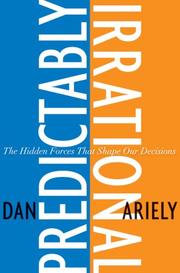 Predictably IrrationalDan ArielyA playful, eye-opening tour through the hidden forces that secretly pull the strings of our daily decisions.
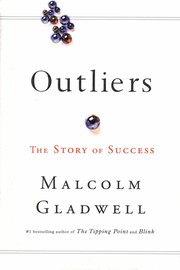 OutliersMalcolm GladwellAn engaging journey that dismantles the myth of the self-made genius to reveal the hidden forces behind extraordinary success.