Books › Predictably Irrational
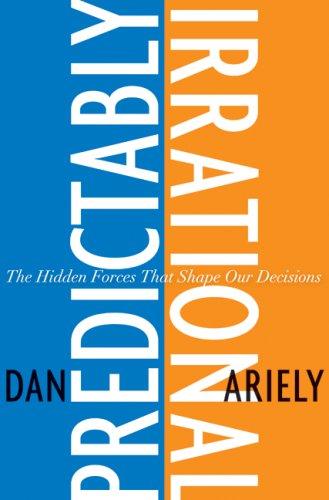
Predictably Irrational
The Hidden Forces That Shape Our Decisions
400 pages
A playful, eye-opening tour through the hidden forces that secretly pull the strings of our daily decisions.
What it feels like
Reading this book feels like sitting down for coffee with a brilliant, slightly mischievous professor who is determined to prove that you don't know your own mind. The pace is brisk and engaging, bouncing effortlessly between clever university experiments and highly relatable everyday dilemmas—from ordering at a restaurant to buying a house. It cultivates a mood of constant, delightful epiphany, making you laugh at human foolishness before realizing you are the punchline. The prose is conversational and entirely devoid of academic jargon, ensuring the complex behavioral economics go down smooth. It is a perfect fit for curious readers who love having their worldview gently dismantled, leaving them with a sharper, more forgiving understanding of our shared human fallibility.
- Mood
- intellectually stimulating
- playful
- eye-opening
- Tone
- conversational
- witty
- inquisitive
- accessible
- Pace
- brisk
- Themes
- the illusion of control · human fallibility · the psychology of choice · hidden motivations · social versus market norms
- The writing
- Clear, anecdotal, and highly conversational, effortlessly translating complex behavioral experiments into relatable, everyday scenarios.
- The arc
- Begins with amused curiosity at our everyday quirks and deepens into a sobering but empowering realization of how easily our minds are manipulated.
- Who it's for
- Curious thinkers and armchair psychologists who love having their assumptions challenged and want to understand the hidden gears of human behavior.
Content notes
- discussions of financial loss
- descriptions of pain tolerance experiments
About the book
How do we think about money?What caused bankers to lose sight of the economy?What caused individuals to take on mortgages that were not within their means?What irrational forces guided our decisions?And how can we recover from an economic crisis? In this revised and expanded edition of the New York Times and Predictably Irrational, Duke University's behavioral economist Dan Ariely explores the hidden forces that shape our decisions, including some of the causes responsible for the current economic crisis. Bringing a much-needed dose of sophisticated psychological study to the realm of public policy, Ariely offers his own insights into the irrationalities of everyday life, the decisions that led us to the financial meltdown of 2008, and the general ways we get ourselves into trouble.Blending common experiences and clever experiments with groundbreaking analysis, Ariely demonstrates how expectations, emotions, social norms, and other invisible, seemingly illogical forces skew our reasoning abilities. As he explains, our reliance on standard economic theory to design personal, national, and global policies may, in fact, be dangerous. The mistakes that we make as individuals and institutions are not random, and they can aggregate in the market—with devastating results. In light of our current economic crisis, the consequences of these systematic and predictable mistakes have never been clearer.Packed with new studies and thought-provoking responses to readers' questions and comments, this revised and expanded edition of Predictably Irrational will change the way we interact with the world—from the small decisions we make in our own lives to the individual and collective choices that shape our economy.
Description from Open Library.
Books like Predictably Irrational
See why they match Perfectly irrationalDan ArielyA playful, eye-opening tour through the hidden quirks and cognitive blind spots that secretly run our lives.
 MisbehavingRichard H. ThalerA witty, eye-opening tour through the delightfully irrational quirks of human decision-making.
 NudgeRichard H. Thaler and Cass R. SunsteinA fascinating, practical lens on human irrationality that makes you rethink every menu, form, and default setting you encounter.
 Thinking, fast and slowDaniel KahnemanA humbling, mind-expanding tour through the hidden machinery of your own thoughts that will permanently alter how you view human rationality.
 The honest truth about dishonestyDan ArielyA playful, eye-opening exploration of the little lies we tell ourselves and the surprising ways our moral compasses go astray.
 Happy moneyElizabeth DunnA breezy, science-backed guide that flips the script on personal finance, focusing on how to buy joy rather than just accumulate wealth.