Books › History of the Decline and Fall of the Roman Empire Complete and Unabridged
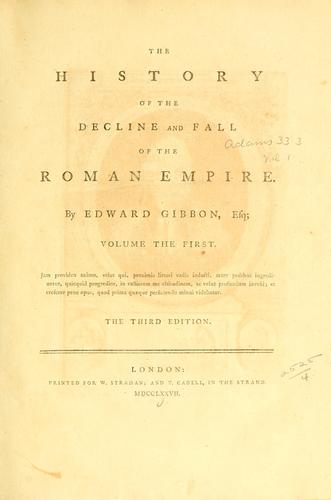
History of the Decline and Fall of the Roman Empire Complete and Unabridged
First published 1776 · 4100 pages
A majestic, deeply ironic chronicle of a civilization's slow and inevitable decay.
What it feels like
Reading this monumental work feels like standing among the marble ruins of antiquity at twilight. The narrative unfolds with a steady, relentless majesty, carried by rolling, sonorous sentences that are as architecturally sound as the empire they describe. Beneath the erudite surface lies a biting, wry irony; the narrator observes centuries of political intrigue, religious upheaval, and military disaster with a detached, almost cynical amusement. It is a deeply immersive, melancholic experience that demands patience but rewards the reader with a profound sense of scale and the sobering realization of civilization's fragility. This is a feast for readers who savor grand, sweeping histories and elegant prose that turns the decay of human ambition into high art.
- Mood
- monumental
- melancholic
- sweeping
- contemplative
- Tone
- authoritative
- wry
- ironic
- erudite
- cynical
- Pace
- steady
- Themes
- the fragility of civilization · corrupting nature of power · inevitable decay · religion and state · hubris and ruin
- The writing
- Majestic, rhythmic, and heavily stylized, built on perfectly balanced clauses and laced with biting, elegant irony.
- The arc
- A slow, majestic descent from the heights of human achievement into the melancholic ruins of a fractured world.
- Who it's for
- Patient lovers of narrative history and classic literature who savor sonorous prose and sweeping, cynical observations on human nature.
Content notes
- war and military violence
- political assassination
- religious persecution
- imperialism
About the book
Gibbon's masterpiece, which narrates the history of the Roman Empire from the second century a.d. to its collapse in the west in the fifth century and in the east in the fifteenth century, is widely considered the greatest work of history ever written. This abridgment retains the full scope of the original, but in a compass equivalent to a long novel. Casual readers now have access to the full sweep of Gibbon's narrative, while instructors and students have a volume that can be read in a single term. This unique edition emphasizes elements ignored in all other abridgments--in particular the role of religion in the empire and the rise of Islam.From the Trade Paperback edition.
Description from Open Library.
Books like History of the Decline and Fall of the Roman Empire Complete and Unabridged
See why they match In the shadow of the swordTom HollandA sweeping, vividly detailed journey through the twilight of ancient empires and the dawn of a new historical epoch.
 The fall of Constantinople, 1453Steven RuncimanA monumental and elegiac history that captures the tense final days of an empire and the shockwaves that reshaped the world.
 The civilization of the Middle AgesNorman F. CantorA sweeping, opinionated, and deeply human journey through the cultural and intellectual awakening of the medieval world.
 HistoryHerodotusA sprawling, gossipy, and endlessly curious journey through the ancient world that blends myth, ethnography, and the clash of empires.
 The Roman EmpireIsaac AsimovA sweeping, accessible journey through five centuries of imperial triumph, political intrigue, and eventual collapse.
 A Study of HistoryArnold J. ToynbeeA monumental, sweeping gaze across the centuries that attempts to decode the very DNA of human civilization.