Books › How Buildings Learn
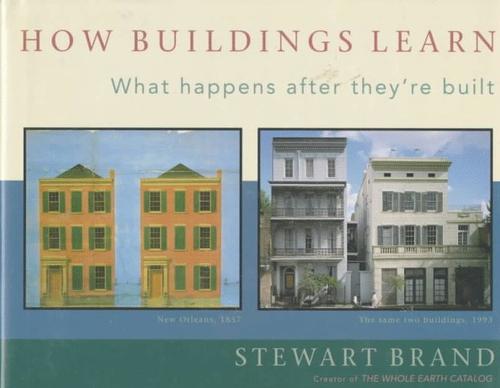
How Buildings Learn
What Happens After They're Built
256 pages
A paradigm-shifting lens that transforms the everyday built environment from a collection of static objects into a slow-motion documentary of human life.
What it feels like
Reading this book feels like taking a long, eye-opening walk through a familiar city with a brilliantly observant friend who points out the hidden histories in every brick and patched roof. It moves at a steady, contemplative pace, inviting you to slow down and look closely at the friction between grand architectural visions and the messy, practical reality of human habitation. The prose is lucid, aphoristic, and wonderfully free of academic jargon, carrying a pragmatic yet deeply reverent tone toward the vernacular and the everyday. It cultivates a grounded, expansive mood that fundamentally rewires how you see the spaces around you. Perfect for curious generalists, urbanists, and tinkerers, it leaves you with a profound appreciation for the slow, organic evolution of the places we call home.
- Mood
- contemplative
- grounded
- eye-opening
- Tone
- pragmatic
- observant
- inquisitive
- contrarian
- lucid
- Pace
- steady
- Themes
- the passage of time · organic adaptation · vernacular wisdom · friction between design and reality · human-centered evolution
- The writing
- Clear, aphoristic, and deeply grounded in practical observation, avoiding academic jargon in favor of plainspoken wisdom.
- The arc
- The reader shifts from viewing structures as static monuments to appreciating them as living, breathing entities shaped by time and human friction.
- Who it's for
- Curious generalists, urbanists, and tinkerers who love understanding the hidden, messy logic behind how the world actually works.
About the book
Buildings have often been studies whole in space, but never before have they been studied whole in time. How Buildings Learn is a masterful new synthesis that proposes that buildings adapt best when constantly refined and reshaped by their occupants, and that architects can mature from being artists of space to becoming artists of time. From the connected farmhouses of New England to I.M. Pei's Media Lab, from "satisficing" to "form follows funding," from the evolution of bungalows to the invention of Santa Fe Style, from Low Road military surplus buildings to a High Road English classic like Chatsworth -- this is a far-ranging survey of unexplored essential territory. More than any other human artifacts, buildings improve with time -- if they're allowed to. How Buildings Learn shows how to work with time rather than against it. - Publisher.
Description from Open Library.
Books like How Buildings Learn
See why they match The Timeless Way of BuildingChristopher AlexanderA meditative journey into the soul of architecture that reveals how spaces can feel as natural and alive as the people who inhabit them.
 A pattern languageChristopher AlexanderA philosophical and practical field guide to building spaces that feel deeply, fundamentally alive.
 The Clock of the Long NowStewart BrandA mind-expanding invitation to step off the treadmill of the present and breathe in the stabilizing scale of deep time.
 Cradle to CradleWilliam McDonough and Michael BraungartA paradigm-shifting blueprint that replaces environmental guilt with a thrilling, actionable vision for regenerative design.
 1001 buildings you must see before you dieMark IrvingA globe-trotting, century-spanning visual feast that celebrates the monumental achievements of human design.
 What technology wantsKevin KellyA sweeping, optimistic reframing of technology as a living, evolving force deeply intertwined with human destiny.