Books › A pattern language
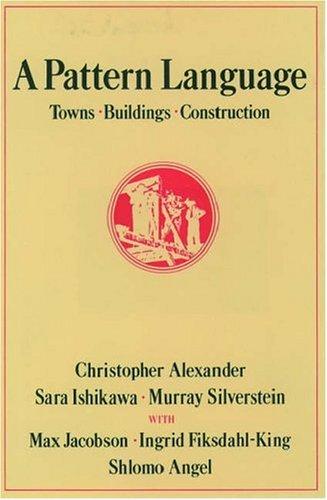
A pattern language
1320 pages
A philosophical and practical field guide to building spaces that feel deeply, fundamentally alive.
What it feels like
Reading this book feels less like studying a textbook and more like wandering through a beautifully designed, sunlit city with a wise friend. It is a deeply comforting, meandering experience that invites you to dip in and out of its interconnected ideas. The prose is surprisingly poetic, blending pragmatic architectural advice with profound humanistic philosophy. You are enveloped in a contemplative, grounded mood as you explore how the placement of a window, the height of a ceiling, or the shape of a public square can foster intimacy, community, and joy. It delights dreamers, designers, and anyone who has ever walked into a room and wondered why it feels so perfectly right. It changes the way you look at the built world forever.
- Mood
- contemplative
- cozy
- grounded
- inspiring
- Tone
- earnest
- philosophical
- visionary
- humanistic
- Pace
- meandering
- Themes
- human-centric design · psychology of space · organic community growth · interconnectedness · the meaning of home
- The writing
- Clear, structured, and surprisingly lyrical, blending pragmatic instruction with gentle philosophical musings.
- The arc
- Moves from a sense of structural curiosity to a profound, comforting realization of how deeply our environments shape our humanity.
- Who it's for
- Designers, urbanists, and daydreamers who want to understand the invisible forces that make a space feel like home.
About the book
Alexander and his co-authors present us with over two hundred (roughly 250) "patterns" that they believe must be present in order for an environment to be pleasing, comfortable, or in their words, "alive." The patterns start at the most general level -- the first pattern, "Independent Regions," describes the ideal political entity, while another of my favorite patterns, "Mosaic of Subcultures," described the proper distribution of different groups within a city. The patterns gradually become more specific -- you'll read arguments about how universities should relate to the community, the proper placement of parks, the role of cafes in a city's life. If you wonder about the best design for a home, the authors will describe everything from how roofs and walls should be built, down to how light should fall within the home, where your windows should be placed, and even the most pleasant variety of chairs in the home. An underlying theme of all the patterns is that architecture, at its best, can be used to foster meaningful human interaction, and the authors urge us to be aware of how the houses we build can help us balance needs for intimacy and privacy.
Description from Open Library.
Books like A pattern language
See why they match The Timeless Way of BuildingChristopher AlexanderA meditative journey into the soul of architecture that reveals how spaces can feel as natural and alive as the people who inhabit them.
 Notes on the synthesis of formChristopher AlexanderA deeply analytical and philosophical exploration of how design and aesthetics shape the structures around us.
 How Buildings LearnStewart BrandA paradigm-shifting lens that transforms the everyday built environment from a collection of static objects into a slow-motion documentary of human life.
 Human transitJarrett WalkerA clarifying, pragmatic lens that transforms the chaotic noise of city planning into elegant, understandable geometry.
 On LookingAlexandra HorowitzA gentle invitation to wake up and notice the hidden wonders scattered across your daily routine.
 The Image of the CityKevin LynchA perspective-shifting lens that transforms the chaotic modern metropolis into a readable, deeply human map of memories and landmarks.