Books › How to solve it
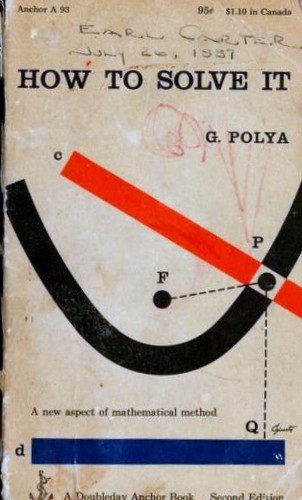
How to solve it
First published 1971 · 304 pages
A patient, brilliant masterclass in untangling the knots of your own thinking.
What it feels like
Reading this book feels like sitting in a sunlit office with a patient, brilliant mentor who believes you can figure anything out. It is not a book to be rushed; the pace is steady and deliberate, asking you to pause, reflect, and rewire your own cognitive habits. The prose is remarkably lucid, stripping away the intimidation of complex mathematics to reveal the elegant, universal scaffolding of human reasoning. There is a quiet thrill in its pages—the sudden, clarifying rush of a mental fog lifting as you learn to break down insurmountable walls into manageable steps. It will deeply satisfy programmers, puzzle lovers, and anyone who delights in the quiet triumph of a well-solved problem.
- Mood
- contemplative
- clarifying
- focused
- intellectual
- Tone
- encouraging
- lucid
- methodical
- earnest
- Pace
- steady
- Themes
- the beauty of logic · overcoming mental blocks · the universality of reasoning · intellectual empowerment
- The writing
- Clear, precise, and gently conversational, avoiding unnecessary jargon to focus on the elegant mechanics of pure reasoning.
- The arc
- Moves from the daunting fog of a complex challenge to the quiet, empowering satisfaction of a structured breakthrough.
- Who it's for
- Programmers, students, and puzzle enthusiasts who want to sharpen their minds and approach life's challenges with elegant logic.
About the book
A perennial bestseller by eminent mathematician G. Polya, How to Solve It will show anyone in any field how to think straight. In lucid and appealing prose, Polya reveals how the mathematical method of demonstrating a proof or finding an unknown can be of help in attacking any problem that can be “reasoned” out—from building a bridge to winning a game of anagrams. Generations of readers have relished Polya’s deft—indeed, brilliant—instructions on stripping away irrelevancies and going straight to the heart of the problem.
Description from Open Library.
Books like How to solve it
See why they match Mathematics and plausible reasoningGyorgy PolyaA masterclass in the art of intellectual discovery, revealing the intuitive leaps and educated guesses that precede rigorous proof.
 The Joy of XSteven StrogatzA friendly, eye-opening stroll through the hidden logic that shapes our everyday lives, led by the teacher you wish you had.
 Introduction to mathematical philosophyBertrand RussellAn intellectual exploration that peels back the familiar layers of numbers to reveal the philosophical bedrock beneath.
 Problem solving 101Ken WatanabeA delightfully simple, visually engaging toolkit that makes untangling complex problems feel like child's play.
 ElementsEuclidA crystalline journey through pure logic that builds the universe from a single point.
 How we decideJonah LehrerA brisk, anecdote-rich tour through the hidden neurological gears that drive our everyday choices.