Books › Human transit

Human transit
244 pages
A clarifying, pragmatic lens that transforms the chaotic noise of city planning into elegant, understandable geometry.
What it feels like
Reading this book feels like stepping out of a noisy, confusing town hall meeting and into a quiet room with a master teacher. The pace is steady and deliberate, designed to untangle the often-overwhelming debates surrounding urban development and climate change. Instead of drowning the reader in jargon, the prose is refreshingly accessible, breaking down complex civic challenges into simple, elegant geometry. The mood is grounded yet deeply hopeful, replacing the frustration of traffic congestion with a sense of civic empowerment. It is an intellectually stimulating experience that equips both professionals and everyday citizens with the tools to envision better, more connected communities. This is a must-read for anyone who looks at their city's streets and wonders how they could work better.
- Mood
- intellectually stimulating
- hopeful
- grounded
- Tone
- informative
- accessible
- pragmatic
- clarifying
- Pace
- steady
- Themes
- urban problem-solving · civic empowerment · the geometry of space · community enrichment
- The writing
- Clear, accessible, and focused on demystifying complex concepts into simple, geometric truths.
- The arc
- Moves from the overwhelming confusion of urban debates to a sense of empowered, clear-eyed understanding.
- Who it's for
- Urbanists, civic-minded citizens, and anyone frustrated by traffic who wants to understand how cities actually move.
About the book
"Public transit is a powerful tool for addressing a huge range of urban problems, including traffic congestion and economic development as well as climate change. But while many people support transit in the abstract, it's often hard to channel that support into good transit investments. Part of the problem is that transit debates attract many kinds of experts, who often talk past each other. Ordinary people listen to a little of this and decide that transit is impossible to figure out. Jarrett Walker believes that transit can be simple, if we focus first on the underlying geometry that all transit technologies share. In Human Transit, Walker supplies the basic tools, the critical questions, and the means to make smarter decisions about designing and implementing transit services. Human Transit explains the fundamental geometry of transit that shapes successful systems; the process for fitting technology to a particular community; and the local choices that lead to transit-friendly development. Whether you are in the field or simply a concerned citizen, here is an accessible guide to achieving successful public transit that will enrich any community."--Publisher's description.
Description from Open Library.
Books like Human transit
See why they match Palaces for the peopleEric KlinenbergA hopeful, eye-opening exploration of the physical spaces that bind our communities together.
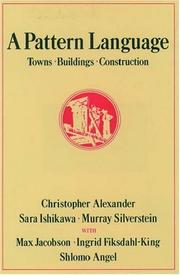 A pattern languageChristopher AlexanderA philosophical and practical field guide to building spaces that feel deeply, fundamentally alive.
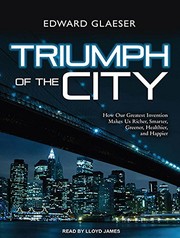 Triumph of the CityEdward GlaeserAn exhilarating, data-backed love letter to the bustling, messy, and miraculous engine of human progress: the metropolis.
 The radiant cityLe CorbusierA dogmatic, visionary manifesto that dreams of replacing chaotic streets with soaring towers of glass, steel, and sunlight.
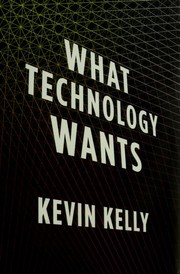 What technology wantsKevin KellyA sweeping, optimistic reframing of technology as a living, evolving force deeply intertwined with human destiny.
 Seeing Like a StateJames C. ScottA paradigm-shifting exploration of why grand, top-down utopian schemes inevitably collapse under the weight of their own rigid logic.