Books › Imperial Earth

Imperial Earth
First published 1975 · 512 pages
A quiet, cerebral journey across the solar system that explores the weight of legacy and the bittersweet nature of human progress.
What it feels like
Reading this book feels like taking a slow, contemplative luxury cruise across the solar system. It is a deeply cerebral and leisurely experience, prioritizing grand sociological ideas and meticulous world-building over high-stakes action. The narrative wraps you in a mood of expansive wonder tinged with a quiet, persistent melancholy, exploring the emotional weight of legacy, the ethics of identity, and the inevitable obsolescence of human achievements. The prose is lucid and scientifically grounded, painting majestic vistas of both a colonized Titan and a future Earth. It will delight readers who crave classic, idea-driven hard science fiction—those who prefer to sit back and marvel at the philosophical implications of humanity's future rather than rush through a space opera.
- Mood
- wondrous
- melancholic
- expansive
- cerebral
- Tone
- contemplative
- analytical
- nostalgic
- philosophical
- Pace
- leisurely
- Themes
- burden of legacy · technological obsolescence · ethics of identity · unrequited love · humanity's future
- The writing
- Clear, methodical, and scientifically grounded, prioritizing lucid exposition and grand vistas over emotional fireworks.
- The arc
- Moves from a quiet sense of duty on a distant moon to a bittersweet, awe-tinged reckoning with Earth's history and the future of the human race.
- Who it's for
- Fans of classic, idea-driven hard sci-fi who enjoy detailed world-building and quiet, sociological reflection over action-packed space battles.
Content notes
- genetic illness
- unrequited love
About the book
Duncan Makenzie is the latest generation of the 'first family' of Titan, a colonised moon of Saturn. Originally settled by his grandfather Malcolm Makenzie in the early 23rd century, Titan's economy has flourished based on the harvest and sale of hydrogen mined from the atmosphere, which is used to fuel the fusion engines of interplanetary spacecraft.
As the plot opens in 2276, a number of factors are combining to make a diplomatic visit to the 'mother world' of Earth a necessity. Firstly, the forthcoming 500th anniversary of US Independence, which is bringing in colonists from the entire Solar System, obviously needs a suitable representative from Titan. Secondly, the Makenzie family carry a fatal damaged gene that means any normal continuation of the family line is impossible—so both Duncan and his "father" Colin are clones of his "grandfather" Malcolm. Human cloning is a mature technology but is even at this time ethically controversial. And thirdly, technological advances in spacecraft drive systems — specifically the 'asymptotic drive' which improves the specific impulse and thrust by orders of magnitude — means that Titan's whole economy is under threat as the demand for hydrogen is about to collapse.
The human aspects of the tale center mainly on the intense infatuation (largely unrequited but not unconsummated) that the two main male characters, Duncan and Karl Helmer, develop for the vividly characterized Catherine Linden Ellerman (Calindy), a visitor to Titan from Earth in their youth, and its lifelong consequences.
A number of other sub-plots suggest some sort of greater mystery, but remain unexplored. The book ends with him returning home with his new "child" Malcolm (who is a clone of his dead friend Karl), leaving the other plot threads dangling.
The book is the first work of science fiction to feature a starship powered by a black hole
Description from Open Library.
Books like Imperial Earth
See why they match EarthlightArthur Charles ClarkeA scientifically grounded, slow-burning geopolitical thriller set against the stark, awe-inspiring backdrop of the lunar surface.
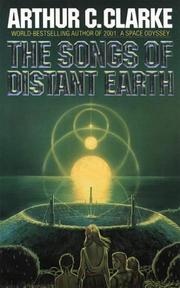 The Songs of Distant EarthArthur Charles ClarkeA quiet, sun-drenched meditation on the vastness of space, the loss of a homeworld, and the bittersweet beauty of fleeting human connection.
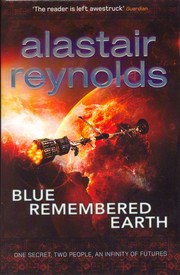 Blue remembered EarthAlastair ReynoldsA sprawling, sunlit journey across a utopian solar system where the weight of family history threatens to shatter a fragile peace.
 The Hammer of GodArthur C. ClarkeA methodical, awe-inspiring race against cosmic indifference where human ingenuity is the only shield against annihilation.
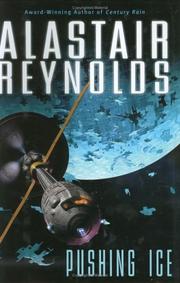 Pushing IceAlastair ReynoldsA gritty crew is dragged into a mind-bending journey through deep time, fueled by a bitter, decades-long grudge.
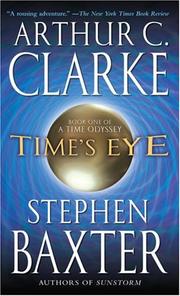 Time's Eye a Time OdysseyArthur C. Clarke and Stephen BaxterA grand, mind-bending thought experiment where the greatest empires of human history collide under the watchful eyes of unknowable cosmic forces.