Books › Introduction to automata theory, languages, and computation

Introduction to automata theory, languages, and computation
750 pages
A rigorous, mind-expanding journey into the mathematical soul of computer science, mapping the absolute boundaries of what can and cannot be computed.
What it feels like
Reading this foundational text is less like reading a book and more like constructing a cathedral of logic in your mind. The pace is necessarily steady, demanding that you sit with a pencil and paper, wrestling with abstract machines and formal grammars until the concepts finally click. It possesses a deeply cerebral, focused mood, stripping away the messy realities of hardware and software to reveal the pure, mathematical truths of computation. The prose is authoritative and precise, guiding you through dense proofs with a methodical clarity that rewards patient study. It is a deeply satisfying, intellectually rigorous experience designed for computer science students and dedicated programmers who crave a profound understanding of the absolute limits of what machines can achieve.
- Mood
- cerebral
- focused
- illuminating
- structured
- Tone
- authoritative
- precise
- academic
- methodical
- Pace
- steady
- Themes
- the limits of computation · mathematical abstraction · the architecture of logic · foundational truth
- The writing
- Concise, highly structured, and mathematically rigorous, prioritizing absolute clarity and logical progression over stylistic flourish.
- The arc
- Moves from the daunting challenge of abstract definitions to the profound satisfaction of understanding the absolute limits of computation.
- Who it's for
- Computer science students and deeply curious programmers who want to peer beneath the code and understand the mathematical boundaries of what machines can actually do.
About the book
"This classic book on formal languages, automata theory, and computational complexity has been updated to present theoretical concepts in a concise and straightforward manner with increased coverage of practical applications. This third edition offers students a less formal writing style while providing the most accessible coverage of automata theory available, solid treatment on constructing proofs, many figures and diagrams to help convey ideas, and sidebars to highlight related material. A new feature of this edition is Gradiance, a Web-based homework and assessment tool. Each chapter offers an abundance of exercises, including selected Gradiance problems, for a true hands-on learning experience for students."--BOOK JACKET.
Description from Open Library.
Books like Introduction to automata theory, languages, and computation
See why they match Switching and finite automata theoryZvi Kohavi; Niraj K. JhaA rigorous, methodical journey into the foundational logic that powers modern computing machinery.
 Compilers, principles, techniques, and toolsAlfred V. Aho, Ravi Sethi and othersA rigorous, foundational descent into the deep magic of how human-readable code is transformed into machine execution.
 Concrete mathematicsRonald L. Graham and Oren PatashnikA rigorous, playful journey through the mathematical foundations of computer science that rewards deep focus with flashes of pure intellectual clarity.
 Mastering Regular ExpressionsJeffrey E. F. FriedlAn illuminating deep dive that turns a notoriously cryptic programming syntax into an elegant puzzle-solving superpower.
 Computer scienceJ. Glenn BrookshearA structured, illuminating map of the digital world that transforms technological mystery into foundational understanding.
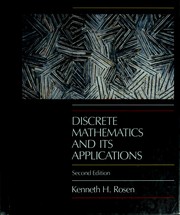 Discrete Mathematics and Its ApplicationsKenneth H. RosenA rigorous, foundational journey through the building blocks of logic and computation that rewards patient, methodical study.