Books › Compilers, principles, techniques, and tools

Compilers, principles, techniques, and tools
First published 1986 · 1000 pages
A rigorous, foundational descent into the deep magic of how human-readable code is transformed into machine execution.
What it feels like
Reading this legendary text is a rite of passage that feels less like casual reading and more like an intellectual expedition. The atmosphere is intensely cerebral and uncompromisingly rigorous, demanding a slow, steady pace as you navigate dense thickets of automata theory, syntax trees, and optimization algorithms. It is not a book that holds your hand; rather, it challenges you to rise to its level of precision. Yet, for those who persevere, the experience is profoundly rewarding. The emotional journey shifts from being overwhelmed by arcane complexity to experiencing the deep, satisfying click of understanding how the fundamental tools of computing actually work. It will delight anyone who wants to slay the dragon of systems programming and truly understand the machine.
- Mood
- cerebral
- focused
- challenging
- structured
- Tone
- authoritative
- rigorous
- didactic
- precise
- academic
- Pace
- steady
- Themes
- the architecture of computation · complexity management · foundational understanding · translation of ideas to execution
- The writing
- Dense, mathematical, and uncompromisingly precise, demanding slow and careful study.
- The arc
- Moves from a sense of overwhelming, arcane complexity to a satisfying, hard-won mastery of computational foundations.
- Who it's for
- Computer science students and systems programmers eager to demystify the deep magic of how software is actually built and executed.
About the book
This book covers topics related to the functionality and design of compilers, including:
Compiler structure - Lexical analysis (including regular expressions and finite automata) - Syntax analysis (including context-free grammars, LL parsers, bottom-up parsers, and LR parsers) - Syntax-directed translation - Type checking (including type conversions and polymorphism) - Run-time environment (including parameter passing, symbol tables, and storage allocation) - Code generation (including intermediate code generation) - Code optimization
Description from Open Library.
Books like Compilers, principles, techniques, and tools
See why they match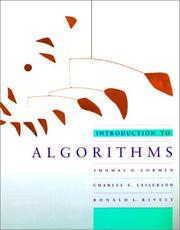 Introduction to AlgorithmsThomas H. Cormen, Charles E. Leiserson and othersA monumental, demanding masterclass in computational logic that rewards patient study with profound structural clarity.
 Introduction to automata theory, languages, and computationJohn E. Hopcroft, Jeffrey D. Ullman and othersA rigorous, mind-expanding journey into the mathematical soul of computer science, mapping the absolute boundaries of what can and cannot be computed.
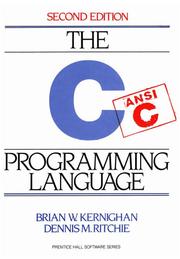 The C Programming LanguageBrian W. KernighanA masterclass in elegant brevity that feels like being handed the keys to the machine.
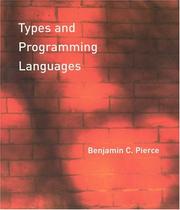 Types and Programming LanguagesBenjamin C. PierceA rigorous, hands-on journey into the logical architecture that underpins modern programming languages.
 Let us CYashavant Prabhakar KanetkarA conversational, step-by-step guide that transforms the daunting world of programming into an accessible, logical puzzle.
 The C++ programming languageBjarne StroustrupA rigorous, authoritative descent into the mechanics and philosophy of building complex software systems.