Books › Invention of air

Invention of air
First published 2009 · 254 pages
A thrilling intellectual treasure hunt that connects the discovery of oxygen to the founding of a nation.
What it feels like
Reading this book feels like sitting in on a fascinating, multidisciplinary salon where history, science, and politics collide. The narrative moves at a brisk, engaging pace, driven by an infectious enthusiasm for how ideas evolve and spread. It is an intellectually expansive experience, wrapping the reader in a mood of constant discovery and illumination. The prose is energetic and accessible, effortlessly connecting the dots between the chemistry of gases, the theology of early America, and the personal networks of the Founding Fathers. It is perfect for the curious reader who delights in sudden moments of clarity and loves seeing the hidden scaffolding behind world-changing historical shifts. You leave the book with a renewed sense of wonder at the interconnectedness of human knowledge.
- Mood
- illuminating
- expansive
- intellectually stimulating
- Tone
- enthusiastic
- inquisitive
- intellectual
- engaging
- Pace
- brisk
- Themes
- the interconnectedness of ideas · paradigm shifts · intersection of faith and reason · intellectual networks
- The writing
- Accessible, energetic, and deeply synthetic, weaving disparate historical and scientific threads into a cohesive narrative.
- The arc
- Moves from curiosity about a forgotten historical figure to a profound appreciation for the interconnectedness of human knowledge and progress.
- Who it's for
- Curious minds who love intellectual history, the history of science, and seeing how big ideas shape society.
Content notes
- political persecution
- mob violence
About the book
Bestselling author Steven Johnson recounts—in dazzling, multidisciplinary fashion—the story of the brilliant man who embodied the relationship between science, religion, and politics for America’s Founding Fathers. The Invention of Air is a book of world-changing ideas wrapped around a compelling narrative, a story of genius and violence and friendship in the midst of sweeping historical change that provokes us to recast our understanding of the Founding Fathers. It is the story of Joseph Priestley—scientist and theologian, protege of Benjamin Franklin, friend of Thomas Jefferson—an eighteenth-century radical thinker who played pivotal roles in the invention of ecosystem science, the discovery of oxygen, the founding of the Unitarian Church, and the intellectual development of the United States. And it is a story that only Steven Johnson, acclaimed juggler of disciplines and provocative ideas, can do justice to. In the 178 0s, Priestley had established himself in his native England as a brilliant scientist, a prominent minister, and an outspoken advocate of the American Revolution, who had sustained long correspondences with Franklin, Jefferson, and John Adams. Ultimately, his radicalism made his life politically uncomfortable, and he fled to the nascent United States. Here, he was able to build conceptual bridges linking the scientific, political, and religious impulses that governed his life. And through his close relationships with the Founding Fathers—Jefferson credited Priestley as the man who prevented him from abandoning Christianity—he exerted profound if little-known influence on the shape and course of our history. As in his last bestselling work, The Ghost Map, Steven Johnson here uses a dramatic historical story to explore themes that have long engaged him: innovation and the way new ideas emerge and spread, and the environments that foster these breakthroughs. And as he did in Everything Bad Is Good for You, Johnson upsets some fundamental assumptions about the world we live in—namely, what it means when we invoke the Founding Fathers—and replaces them with a clear-eyed, eloquent assessment of where we stand today.
Description from Open Library.
Books like Invention of air
See why they match The Alchemy of AirThomas HagerA gripping, tragic narrative history about the brilliant minds who pulled bread from the air and inadvertently unleashed a century of unprecedented destruction.
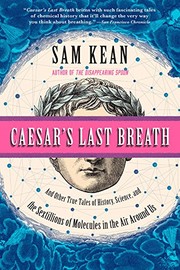 Caesar's Last BreathSam KeanAn expansive, globe-trotting exploration of the invisible elements that connect our every breath to the grand sweep of human history.
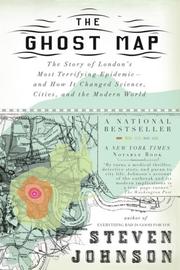 The Ghost MapSteven JohnsonA gripping, grimy descent into Victorian London that reads like a medical detective thriller where science races against a deadly, invisible clock.
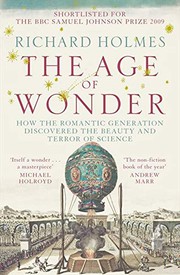 The age of wonderHolmes, RichardA sweeping, luminous journey into the minds of the dreamers and explorers who married poetry with the scientific method.
 Where good ideas come fromSteven JohnsonAn illuminating, cross-disciplinary journey that reveals how collaboration, serendipity, and shared spaces spark human progress.
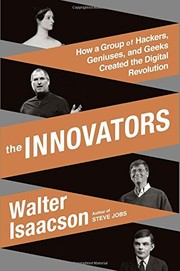 The InnovatorsWalter IsaacsonA sweeping, deeply human exploration of the collaborative genius that wired our modern world.