Books › Irreligion

Irreligion
A Mathematician Explains Why the Arguments for God Just Don't Add Up
First published 2007 · 176 pages
A witty, logic-driven dismantling of theological arguments that feels like a brisk, satisfying intellectual workout.
What it feels like
Reading this book feels like sitting down for coffee with a brilliant, slightly wry professor who has a knack for making complex logic feel effortlessly clear. The pace is brisk and engaging, moving swiftly through centuries of theological debate with the sharp, clean precision of a mathematician. It cultivates a mood of clear-eyed rationality, stripping away emotional rhetoric to examine the bare bones of belief. The prose is conversational and witty, entirely devoid of dense jargon or intimidating formulas, making the intellectual heavy lifting feel like a stimulating puzzle rather than a chore. It is a deeply satisfying read for skeptics and analytical thinkers who delight in seeing cognitive biases exposed and logical fallacies neatly, cheerfully dismantled.
- Mood
- intellectual
- clear-eyed
- stimulating
- rational
- Tone
- wry
- analytical
- irreverent
- conversational
- sharp
- Pace
- brisk
- Themes
- rationality vs. faith · logical fallacies · cognitive biases · intellectual skepticism · secular clarity
- The writing
- Crisp, witty, and highly accessible, translating abstract logical concepts into conversational, everyday language.
- The arc
- Moves from a stance of curious skepticism to a satisfying, grounded sense of intellectual clarity.
- Who it's for
- Skeptics, science enthusiasts, and analytical thinkers who enjoy seeing philosophical arguments dismantled with sharp, accessible logic.
Content notes
- critiques of religion
About the book
Are there any logical reasons to believe in God? Mathematician Paulos thinks not. Here he presents the case for his own worldview, organizing his book into twelve chapters that refute the twelve arguments most often put forward for believing in God's existence. Interspersed among his twelve counterarguments are remarks on a variety of irreligious themes, ranging from the nature of miracles and creationist probability to cognitive illusions and prudential wagers. Special attention is paid to topics, arguments, and questions that spring from his incredulity "not only about religion but also about others' credulity." Despite the strong influence of his day job, Paulos says, there isn't a single mathematical formula in the book.--From publisher description.
Description from Open Library.
Books like Irreligion
See why they match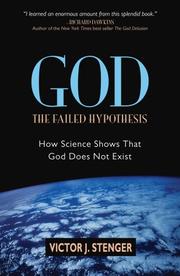 GodVictor J. StengerA methodical, science-driven examination that treats the divine as a testable hypothesis.
 Is God a mathematician?Mario LivioA contemplative journey through history and logic that asks whether the universe is fundamentally built on numbers.
 God is not greatChristopher HitchensA blistering, erudite polemic that dismantles dogma with razor-sharp wit and unapologetic intellectual fire.
 The God DelusionRichard DawkinsA fierce, unapologetic intellectual broadside that dismantles dogma while celebrating the awe-inspiring reality of the natural universe.
 36 arguments for the existence of GodRebecca GoldsteinA deeply intellectual yet emotionally expansive exploration of the messy collision between rational thought and the raptures of faith.
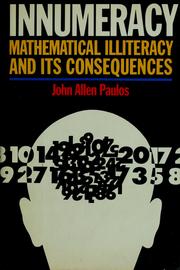 InnumeracyJohn Allen PaulosA witty, eye-opening toolkit for navigating a world obsessed with misleading numbers and irrational fears.