Books › Innumeracy

Innumeracy
Mathematical Illiteracy and Its Consequences
First published 1988 · 208 pages
A witty, eye-opening toolkit for navigating a world obsessed with misleading numbers and irrational fears.
What it feels like
Reading this book feels like sitting down with a witty, slightly exasperated professor who is determined to change how you see the world. The pace is brisk and conversational, moving swiftly from amusing anecdotes about lottery tickets to sharp critiques of pseudoscience and media sensationalism. It creates an atmosphere of lucid, pragmatic clarity, stripping away the intimidation often associated with mathematics. Instead of drowning you in equations, the prose relies on crisp logic and relatable scenarios, making complex concepts of probability and scale feel suddenly intuitive. It is a deeply empowering read, designed to delight curious skeptics and anyone looking to sharpen their critical thinking against the daily barrage of bad statistics and cognitive biases.
- Mood
- eye-opening
- intellectual
- pragmatic
- lucid
- Tone
- wry
- conversational
- witty
- didactic
- exasperated
- Pace
- brisk
- Themes
- cognitive biases · hidden math of everyday life · rational thinking · probability and chance · danger of ignorance
- The writing
- Crisp, anecdotal, and highly accessible, relying on relatable examples rather than dense equations.
- The arc
- Begins with a humorous frustration at societal blind spots and builds toward an empowering, clear-eyed understanding of reality.
- Who it's for
- Curious skeptics and lifelong learners who want to sharpen their critical thinking and stop being fooled by bad statistics.
About the book
Mathematical Illiteracy and its Consequences is a 1988 book by mathematician John Allen Paulos about innumeracy (deficiency of numeracy) as the mathematical equivalent of illiteracy: incompetence with numbers rather than words. Innumeracy is a problem with many otherwise educated and knowledgeable people.
Description from Open Library.
Books like Innumeracy
See why they match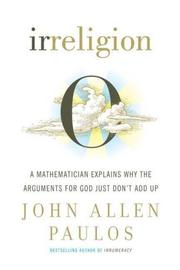 IrreligionJohn Allen PaulosA witty, logic-driven dismantling of theological arguments that feels like a brisk, satisfying intellectual workout.
 Is God a mathematician?Mario LivioA contemplative journey through history and logic that asks whether the universe is fundamentally built on numbers.
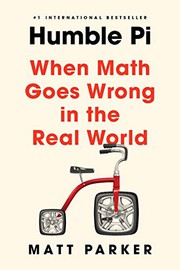 Humble PiMatt ParkerA hilarious, eye-opening tour through the catastrophic and comical consequences of getting the math wrong.
 Mathematics and plausible reasoningGyorgy PolyaA masterclass in the art of intellectual discovery, revealing the intuitive leaps and educated guesses that precede rigorous proof.
 How to solve itGeorge PolyaA patient, brilliant masterclass in untangling the knots of your own thinking.
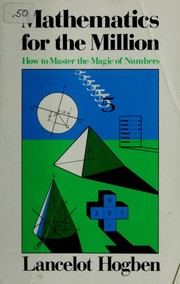 Mathematics for the millionLancelot Thomas HogbenAn empowering, historically rich journey that transforms the intimidating language of numbers into an accessible tool for understanding human civilization.