Books › Leviathan

Leviathan
First published 2001 · 352 pages
A hypnotic, existential mystery that unravels the fragile threads of identity, friendship, and the unpredictable forces of chance.
What it feels like
Reading this novel feels like stepping into a dimly lit room where a close friend is confessing a terrible secret. It is a steady, hypnotic unraveling of a life, blending the suspense of a classic noir with the cerebral depth of a philosophical inquiry. The mood is steeped in a melancholic, existential dread, driven not by high-octane action but by the quiet, terrifying realization of how little we truly know the people we love. The prose is clean, precise, and deeply reflective, pulling you through a labyrinth of chance encounters, stolen identities, and artistic obsessions. It will deeply satisfy readers who crave literary mysteries that prioritize psychological excavation and the haunting architecture of memory over neat, tidy resolutions.
- Mood
- noir-tinged
- existential
- shadowy
- haunting
- Tone
- melancholic
- philosophical
- inquisitive
- intimate
- Pace
- steady
- Themes
- fragility of identity · the role of chance · unknowability of others · artistic obsession · political disillusionment
- The writing
- Clean, precise, and hypnotic, blending the hardboiled rhythms of detective fiction with postmodern philosophical inquiry.
- The arc
- Begins with a shocking rupture and spirals backward into a melancholic, obsessive search for understanding, culminating in a tragic, inevitable clarity.
- Who it's for
- Readers who love cerebral, slow-burn literary mysteries that explore the architecture of memory and the elusive nature of truth.
Content notes
- accidental death
- suicide themes
- political violence
- sexual content
About the book
"Leviathan begins when a woman finds an address book and steals a new identity. Or it begins with a sudden, violent death. Or it begins as Peter Aaron sits down to tell the story of his best friend, Benjamin Sachs - to take us, through a life, to the road in rural Wisconsin where Sachs has accidentally blown himself up. Aaron's sole aim is to tell the truth and preserve it, before those who are investigating the case invent a story of their own.".
"Aaron's clues are the small mysteries of any lifetime. Sachs had a marriage Aaron envied, an intelligence he admired, a circle of friends he shared. And then suddenly, after a near-fatal fall that might or might not have been intentional, Sachs disappears. For a while, Aaron's only link to him is through Maria Turner, an artist, and the one witness to Sachs's balcony plunge. Periodically, Sachs reappears, talks manically, and vanishes again - in pursuit of mercy or salvation, in thrall to an idea.".
"Since the first book in his brilliant and acclaimed "New York Trilogy," Paul Auster's "rare combination of talent, scope, and audacity" (The New Republic) has given us worlds in which chance and destiny collide, in which solitary protagonists take us on mysterious, soul-wrenching journeys unparalleled in contemporary fiction. His seventh novel is about friendship and betrayal, sexual desire and estrangement, and the unpredictable intrusions of violence in the everyday.
Rooted in American mythology and archetype, Leviathan is both timeless and resolutely about this moment. It is a daring and immensely moving story by "one of America's most spectacularly inventive writers" (The Times Literary Supplement)."--BOOK JACKET.
Description from Open Library.
Books like Leviathan
See why they match The New York TrilogyPaul AusterA hypnotic, noir-tinged descent into the labyrinth of the self, disguised as a detective novel.
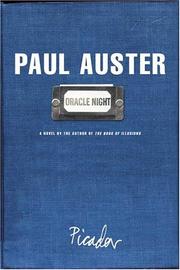 Oracle NightPaul AusterA hypnotic descent into a literary labyrinth where the act of writing begins to rewrite reality itself.
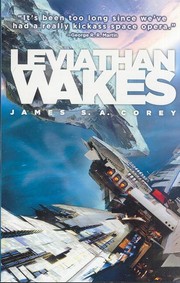 Leviathan WakesJames S. A. CoreyA gritty, neon-lit collision of hardboiled noir and sweeping space opera that accelerates into cosmic terror.
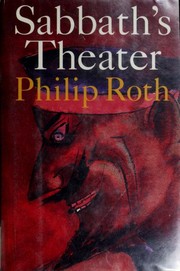 Sabbath's TheaterPhilip RothA torrential, darkly hilarious howl of grief and obscenity from a man refusing to go quietly into old age.
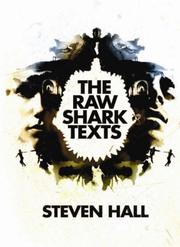 The Raw Shark TextsSteven HallA typographical fever dream where language itself becomes a predator and memory is the only means of survival.
 Humboldt's GiftSaul BellowA sprawling, comic, and deeply philosophical romp through the neuroses of midlife, the ghosts of literary genius, and the absurdities of modern America.