Books › Logic programming
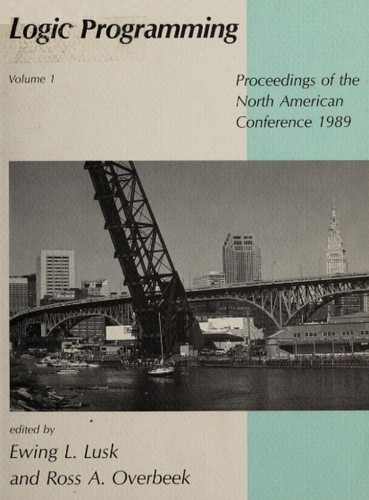
Logic programming
1303 pages
A rigorous, deeply cerebral exploration of the mathematical frameworks that underpin computational logic and programming.
What it feels like
Reading this collection is an exercise in intense intellectual focus, demanding a slow and deliberate pace as you navigate dense thickets of mathematical notation and formal proofs. The atmosphere is entirely cerebral, stripped of narrative in favor of pure, objective rigor. It feels like stepping into a quiet, brightly lit laboratory where the fundamental building blocks of computation are being meticulously examined and tested. The prose is uncompromisingly technical, designed for precision rather than poetry, rewarding the patient reader with sudden flashes of structural clarity. It is a deeply satisfying experience for computer scientists, logicians, and theoretical researchers who find beauty in the elegant, rule-based architecture of logic programming and constructive negation.
- Mood
- cerebral
- focused
- intellectual
- Tone
- academic
- rigorous
- objective
- analytical
- Pace
- steady
- Themes
- computational theory · algorithmic logic · mathematical foundations · problem solving
- The writing
- Highly technical and precise, favoring mathematical notation and formal proofs over narrative flow.
- The arc
- The reader journeys from grappling with dense theoretical concepts to achieving a satisfying, structured understanding of computational logic.
- Who it's for
- Computer science researchers and logicians who delight in the foundational mathematics of programming languages.
About the book
"On constructive negation in logic programming / Teodor C. Przymusinski" (19 p.) inserted.
Description from Open Library.
Books like Logic programming
See why they match Representing and reasoning with probabilistic knowledgeFahiem BacchusA rigorous, deeply analytical dive into the mathematical foundations of how machines handle uncertainty.
 The logic of knowledge basesHector J. LevesqueA rigorous, intellectually demanding exploration of how abstract knowledge can be formalized and processed by machines.
 Artificial intelligenceGeorge F. LugerA rigorous, foundational journey into the logic and architecture of early machine intelligence.
 Advances in neural information processing systemsDavid S. TouretzkyA rigorous, cerebral time capsule of foundational 1990s research in neural networks and cognitive science.
 The (new) turing omnibusA.K. DewdneyA guided tour through the elegant, invisible architecture of logic that powers the modern world.
 On LISPPaul GrahamAn analytical deep dive into building problem-specific languages through bottom-up programming.