Books › The logic of knowledge bases

The logic of knowledge bases
282 pages
A rigorous, intellectually demanding exploration of how abstract knowledge can be formalized and processed by machines.
What it feels like
Reading this book feels like stepping into a quiet, brightly lit laboratory of the mind. It is a deeply intellectual and rigorous experience, demanding a steady pace as you navigate the intricate architecture of first-order predicate logic and symbolic representation. The mood is highly focused and abstract, stripping away the noise of the physical world to examine the pure, mathematical foundations of how a system knows something. Levesque's prose is precise and uncompromising, guiding the reader through complex theorems with an authoritative, objective tone. It is not a casual read, but for computer scientists, logicians, and AI theorists, it offers a profoundly satisfying journey from abstract curiosity to a crystalline understanding of formal reasoning procedures.
- Mood
- intellectual
- focused
- abstract
- Tone
- academic
- rigorous
- analytical
- objective
- Pace
- steady
- Themes
- formal reasoning · the nature of knowledge · mathematical modeling · symbolic representation
- The writing
- Precise, formal, and mathematically rigorous, prioritizing clarity and exactitude over stylistic flourish.
- The arc
- Moves from foundational curiosity to a deep, satisfying clarity regarding complex logical structures.
- Who it's for
- Computer scientists, logicians, and philosophers of AI who want a deep, mathematically grounded understanding of how machines represent and reason with knowledge.
About the book
"A knowledge-based system decides how to act by running formal reasoning procedures over a body of explicitly represented knowledge - a knowledge base. The system is not programmed for specific tasks: rather, it is told what it needs to know and is expected to infer the rest.".
"This book is about the logic of such knowledge bases. It describes in detail the relationship between symbolic representations of knowledge and abstract states of knowledge, exploring along the way the foundations of knowledge, knowledge bases, knowledge-based systems, and knowledge representation and reasoning.
Assuming some familiarity with first-order predicate logic, the book offers a new mathematical model of knowledge that is general and expressive yet more workable in practice than previous models."--BOOK JACKET.
Description from Open Library.
Books like The logic of knowledge bases
See why they match Representing and reasoning with probabilistic knowledgeFahiem BacchusA rigorous, deeply analytical dive into the mathematical foundations of how machines handle uncertainty.
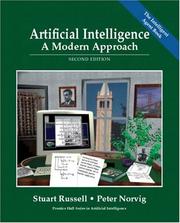 Artificial intelligencePeter NorvigA monumental, intellectually rigorous journey through the architecture of machine intelligence and rational agency.
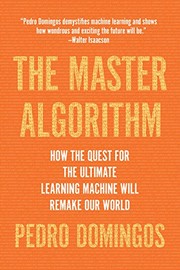 The Master AlgorithmPedro DomingosA visionary, intellectually thrilling safari through the hidden logic that powers our modern world and promises to reshape our future.
 Artificial intelligenceGeorge F. LugerA rigorous, foundational journey into the logic and architecture of early machine intelligence.
 The society of mindVoyager CompanyA playful, mind-bending puzzle box that dismantles the illusion of the self to reveal the hidden machinery of thought.
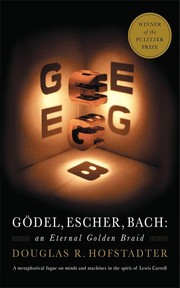 Gödel, Escher, BachDouglas R. HofstadterA dizzying, playful labyrinth of logic, art, and music that fundamentally rewires how you think about thinking.