Books › Longitude

Longitude
First published 2005 · 257 pages
A thrilling, elegant micro-history that transforms a seemingly dry scientific problem into a high-stakes tale of obsession and underdog triumph.
What it feels like
Reading this book feels like unearthing a perfectly crafted antique pocket watch and watching its intricate gears spin to life. It is a brisk, elegant micro-history that transforms the seemingly dry subject of eighteenth-century navigation into a high-stakes human drama. The mood is both intellectual and suspenseful, steeped in the salty peril of maritime exploration and the stuffy, bureaucratic halls of the scientific establishment. The prose is remarkably lucid, translating complex horological and astronomical concepts into a propulsive narrative of obsession, rivalry, and perseverance. It delights in the triumph of the practical over the theoretical, making you root fiercely for its underdog protagonist. Perfect for fans of narrative non-fiction who crave a focused, deeply satisfying story of human ingenuity.
- Mood
- intellectual
- suspenseful
- maritime
- focused
- Tone
- admiring
- dramatic
- accessible
- engaging
- Pace
- brisk
- Themes
- obsession and perseverance · lone genius vs establishment · human ingenuity · high stakes of exploration · the passage of time
- The writing
- Elegant, lucid, and narrative-driven, turning complex scientific concepts into a compelling human drama.
- The arc
- Moves from the perilous uncertainty of early navigation through the frustrating bureaucratic battles of a lone genius, culminating in a satisfying, hard-won triumph.
- Who it's for
- Readers who love accessible micro-histories, tales of underdog inventors, and narrative non-fiction that reads like a novel.
Content notes
- historical shipwrecks
- death at sea
About the book
The dramatic human story of an epic scientific quest and of one man's forty-year obsession to find a solution to the thorniest scientific dilemma of the day--"the longitude problem."
Anyone alive in the eighteenth century would have known that "the longitude problem" was the thorniest scientific dilemma of the day-and had been for centuries. Lacking the ability to measure their longitude, sailors throughout the great ages of exploration had been literally lost at sea as soon as they lost sight of land. Thousands of lives and the increasing fortunes of nations hung on a resolution. One man, John Harrison, in complete opposition to the scientific community, dared to imagine a mechanical solution-a clock that would keep precise time at sea, something no clock had ever been able to do on land.
Longitude is the dramatic human story of an epic scientific quest and of Harrison's forty-year obsession with building his perfect timekeeper, known today as the chronometer. Full of heroism and chicanery, it is also a fascinating brief history of astronomy, navigation, and clockmaking, and opens a new window on our world.
Description from Open Library.
Books like Longitude
See why they match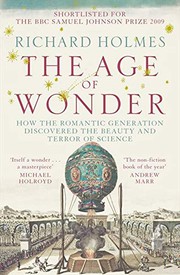 The age of wonderHolmes, RichardA sweeping, luminous journey into the minds of the dreamers and explorers who married poetry with the scientific method.
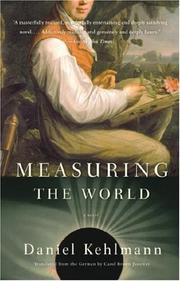 Die Vermessung der WeltDaniel KehlmannA wry, sparkling exploration of two eccentric geniuses trying to capture the infinite universe within the limits of their deeply flawed human lives.
 Newton and the counterfeiterThomas LevensonA legendary genius descends into the gritty underworld of seventeenth-century London to play a deadly game of cat-and-mouse.
 Isaac NewtonJames GleickAn elegant, atmospheric plunge into the obsessive and brilliant mind that dragged humanity out of the dark ages and into the light of modern physics.
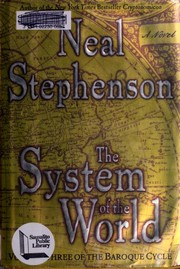 System of the WorldNeal StephensonA massive, brain-bending plunge into the chaotic birth of the modern world, where alchemy, economics, and espionage collide.
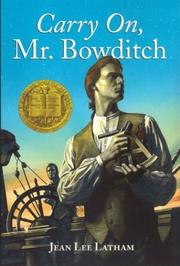 Carry on, Mr. BowditchJean Lee LathamAn inspiring, salt-sprayed journey of a young underdog who navigates his way to greatness through sheer intellectual grit.