Books › Maps of Meaning
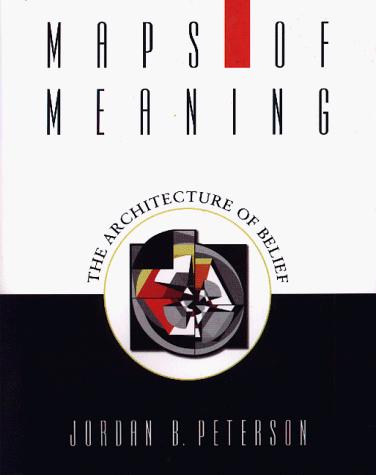
Maps of Meaning
The Architecture of Belief
First published 1999 · 671 pages
A dense, intellectually demanding descent into the psychological architecture of myth, morality, and the eternal struggle between order and chaos.
What it feels like
Reading this book feels like embarking on a rigorous, intellectually demanding expedition into the deepest layers of the human subconscious. The pace is steady and deliberate, requiring you to slow down and wrestle with dense, academic prose that bridges evolutionary biology, neuropsychology, and ancient mythology. It casts a heavy, contemplative mood, immersing the reader in a serious exploration of how humanity constructs meaning out of the eternal tension between order and chaos. The emotional texture is one of profound realization, shifting from existential uncertainty to a structured, awe-inspiring understanding of belief systems. It will deeply satisfy armchair philosophers, psychology enthusiasts, and anyone fascinated by Jungian archetypes who is willing to navigate a sprawling, complex labyrinth of ideas.
- Mood
- contemplative
- heavy
- intellectually demanding
- serious
- Tone
- academic
- earnest
- intense
- authoritative
- philosophical
- Pace
- steady
- Themes
- order and chaos · the power of myth · psychological integration · the search for meaning · evolutionary psychology
- The writing
- Dense, academic, and sprawling, weaving complex psychological theory with mythological analysis and intricate diagrams.
- The arc
- Moves from a sense of existential disorientation into a deeply structured, awe-inspiring appreciation for the ancient frameworks that govern human morality.
- Who it's for
- Deep thinkers and armchair philosophers who crave rigorous, interdisciplinary explorations of Jungian archetypes, religion, and the human subconscious.
Content notes
- existential dread
- discussions of totalitarianism
- references to mass violence
About the book
Why have people from different cultures and eras formulated myths and stories with similar structures? What does this similarity tell us about the mind, morality, and structure of the world itself? From the author of 12 Rules for Life: An Antidote to Chaos comes a provocative hypothesis that explores the connection between what modern neuropsychology tells us about the brain and what rituals, myths, and religious stories have long narrated. A cutting-edge work that brings together neuropsychology, cognitive science, and Freudian and Jungian approaches to mythology and narrative, Maps of Meaning presents a rich theory that makes the wisdom and meaning of myth accessible to the critical modern mind.
Description from Open Library.
Books like Maps of Meaning
See why they match 12 Rules for LifeJordan B. PetersonA tough-love philosophical manual that blends ancient mythology with clinical psychology to forge order out of modern chaos.
 The masks of GodJoseph CampbellA sweeping, scholarly descent into the collective unconscious that reveals the shared spiritual heartbeat of humanity.
 Beyond OrderJordan B. PetersonA weighty, philosophical compass for navigating the inevitable chaos of modern life with resilience and purpose.
 Man's Search for Ultimate MeaningViktor E. FranklA profound, quiet exploration of the human soul's innate drive toward purpose, resilience, and the divine.
 Religion ExplainedPascal BoyerA provocative, intellectually rigorous dive into the evolutionary and cognitive machinery that makes human beings uniquely primed for belief.
 The Righteous MindJonathan HaidtA paradigm-shifting journey into the human brain that completely changes how you view the people you disagree with.