Books › Religion Explained

Religion Explained
448 pages
A provocative, intellectually rigorous dive into the evolutionary and cognitive machinery that makes human beings uniquely primed for belief.
What it feels like
Reading this book feels like stepping into a vast, well-lit laboratory where the deepest mysteries of human nature are examined with both rigor and respect. The pace is steady and methodical, guiding the reader through complex intersections of cognitive science, evolutionary psychology, and anthropology without ever reducing profound spiritual experiences to mere simplistic formulas. The mood is deeply inquisitive and intellectually stimulating, inviting you to look past the superficial varieties of global faiths to discover the hidden, universal architecture of the human mind. It is an ambitious and provocative journey, perfect for readers who delight in understanding the 'why' behind our shared humanity, offering a rich, contemplative exploration of how our brains are fundamentally wired for belief.
- Mood
- intellectually stimulating
- inquisitive
- contemplative
- Tone
- analytical
- provocative
- ambitious
- respectful
- scholarly
- Pace
- steady
- Themes
- the cognitive roots of belief · evolutionary psychology of faith · shared human experience · the mechanics of the mind
- The writing
- Scholarly yet accessible, blending anthropological observation with the rigorous frameworks of cognitive science.
- The arc
- Moves from a sense of vast, overwhelming human variety to a grounded, illuminating understanding of our shared cognitive architecture.
- Who it's for
- Readers fascinated by the intersection of evolutionary psychology, cognitive science, and human spirituality.
About the book
Formerly at Princeton, King's College, Cambridge and the University of Lyon, Pascal Boyer is Professor of Anthropology at Washington University in St Louis, MissouriWhile human religious practice and belief are extraordinarily varied, they are nevertheless not infinitely so. The varieties of belief have provided generations of anthropologists and religious scholars with material for research; there have been fewer attempts to explore what religious beliefs have in common - and fewer still that have been convincing. Following in the footsteps of Noam Chomsky and Steven Pinker's explorations of what languages have in common beneath their vast superficial variety, Pascal Boyer explores the commonalities of religious belief, bringing the new tools of cognitive science and evolutionary psychology to bear on the ways in which beliefs reflect human needs and the ways in which our minds work. This is no sense an attempt to explain religion away, or to reduce it to simplistic nostrums; Boyer is himself an anthropologist, and rejects almost all the usual obvious, but unsatisfying, explanations for religion, in a book that is certainly ambitious and provocative, but also a rich exploration of this profound and important area of human experience - an area that is almost as universal and central to our shared humanity as our common use of language.
Description from Open Library.
Books like Religion Explained
See why they match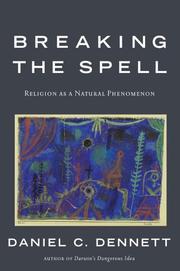 Breaking the spellDaniel C. DennettA methodical, clear-eyed dissection of humanity's oldest and most fiercely protected cultural phenomenon.
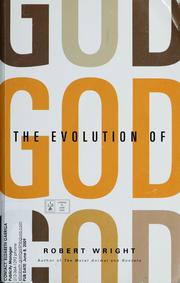 The evolution of GodWright, RobertA sweeping, intellectually rigorous journey through human history that seeks the hidden evolutionary logic behind our search for the divine.
 The End of FaithSam HarrisAn uncompromising, razor-sharp intellectual wake-up call that dismantles the societal taboo against criticizing religious dogma.
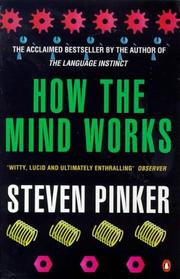 How the Mind WorksSteven PinkerA witty, expansive masterclass that dismantles the magic of human consciousness to reveal the fascinating evolutionary machinery whirring beneath.
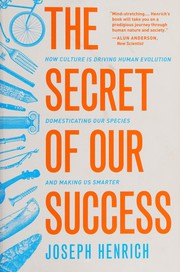 The secret of our successJoseph Patrick HenrichA paradigm-shifting exploration that dismantles the myth of the lone genius to reveal the true superpower of our species: our collective brain.
 The Bonobo and the AtheistHenry Cabot Lodge (Jr.)A warm, scientifically grounded exploration that finds the roots of human goodness not in the heavens, but in the earth and our primate cousins.