Books › Mathematical Methods in the Physical Sciences
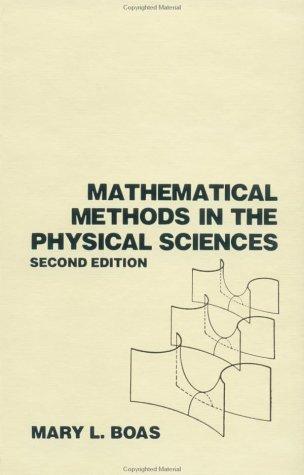
Mathematical Methods in the Physical Sciences
First published 1966 · 864 pages
A pragmatic, illuminating toolkit that transforms intimidating equations into intuitive, physical realities.
What it feels like
Reading this feels like sitting down with a brilliant, endlessly patient tutor who knows exactly where you are going to get stuck. It is a deeply pragmatic experience, stripping away the intimidating abstraction of pure mathematics to reveal the functional, beautiful machinery underneath. The pace is steady and demanding, requiring a pencil in hand, but the reward is a profound sense of illumination. Instead of drowning in rigorous proofs, you are guided toward physical intuition and computational confidence. The atmosphere is one of quiet, focused study, the kind that happens late at night in a university library, culminating in the deep, quiet thrill of finally understanding how the universe's underlying equations actually work.
- Mood
- focused
- illuminating
- structured
- academic
- Tone
- pragmatic
- encouraging
- clear
- authoritative
- instructive
- Pace
- steady
- Themes
- mathematical intuition · problem-solving · the language of physics · practical application
- The writing
- Direct, unpretentious, and conversational, prioritizing intuitive understanding and computational skill over rigorous, abstract proofs.
- The arc
- Moves from the daunting precipice of advanced mathematics to the deep satisfaction of hard-won clarity and practical mastery.
- Who it's for
- Undergraduate physics and engineering students who need a reliable, no-nonsense bridge between basic calculus and advanced physical theories.
About the book
Updates the original, comprehensive introduction to the areas of mathematical physics encountered in advanced courses in the physical sciences. Intuition and computational abilities are stressed. Original material on DE and multiple integrals has been expanded.
Description from Open Library.
Books like Mathematical Methods in the Physical Sciences
See why they match Classical mechanicsGoldstein, HerbertA rigorous, foundational journey through the elegant mathematical machinery that governs the physical universe.
 Linear algebra and its applicationsGilbert StrangA conversational, illuminating journey into the structural beauty of mathematics that makes abstract concepts feel tangible and intuitive.
 Introduction to linear algebraGilbert StrangAn illuminating, conversational guide that transforms abstract mathematical concepts into intuitive, geometric realities.
 Introduction to electrodynamicsDavid Jeffery GriffithsA masterclass in making complex mathematical physics feel like a lively, encouraging conversation with a brilliant mentor.
 Advanced calculusPatrick FitzpatrickA rigorous, structured immersion into the foundational mechanics of mathematical analysis.
 Matrices and tensors in physicsA. W. JoshiA methodical and deeply satisfying exploration of the mathematical architecture that holds the physical world together.