Books › Money
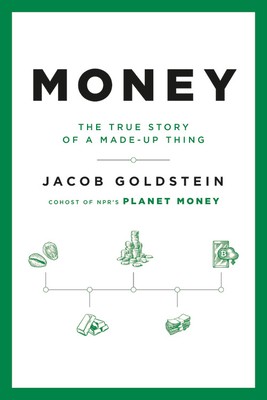
Money
272 pages
A witty, globe-trotting tour through the collective hallucination that makes the modern world go round.
What it feels like
Reading this book feels like sitting next to the most fascinating, well-spoken guest at a dinner party as they unravel the invisible threads holding society together. It is a brisk, highly entertaining journey that strips away the intimidating jargon of economics to reveal the deeply human, often absurd stories behind our financial systems. The mood is relentlessly curious and lighthearted, bouncing from ancient Mesopotamia to modern cyberpunks with a wry, conversational energy. The prose is punchy and journalistic, making complex monetary theory feel as gripping as a heist novel. It is the perfect read for anyone who delights in narrative history, loves a good trivia fact, and wants to finally understand the collective hallucination we call the economy.
- Mood
- curious
- intellectual
- lighthearted
- engaging
- Tone
- wry
- conversational
- witty
- inquisitive
- accessible
- Pace
- brisk
- Themes
- the illusion of value · human ingenuity · societal trust · historical quirks · evolution of systems
- The writing
- Journalistic and punchy, breaking down complex economic concepts with humor, clarity, and an engaging conversational rhythm.
- The arc
- Moves from curious bewilderment at ancient bartering to a fascinated, slightly cynical understanding of modern financial illusions.
- Who it's for
- Curious minds who love narrative history and want to understand the mechanics of the world without slogging through a dry textbook.
Content notes
- financial ruin
- economic instability
About the book
"What is money anyway, and where and why did it originate? According to Jacob Goldstein, this made-up thing has evolved over centuries and takes different forms based on technological advances, the needs of society, and often the crazy ideas of outliers on the fringes. Told through witty, historical anecdotes, Goldstein demystifies this ever-evolving tool from the invention of the first coins in Mesopotamia, to how China invented paper money centuries before it appeared in the west, how at one point in Sweden men carried giant "coins" on their backs to pay for goods, to the gold standard, pound sterling, origins of the Euro, mutual funds, bitcoin and a cashless society. Money presents entertaining tales of fascinating characters who fundamentally changed our monetary systems such as Genghis Khan, John Law, a convicted murderer and professional gambler, the Luddites, and the anarchist cyberpunks who created bitcoin. Through these major movements we see the rise and fall of various financial institutions: central banks, the stock market, the Federal Reserve, and the shadow institutions like Lehman Brothers that helped create the financial crisis of 2008. Lively and accessible and full of interesting tidbits (the word "banker" comes from the Venetian "bench sitters"--Or "banchieri"-of the 1600s who guarded the gold) Goldstein looks at the evolution of money (whose definition appears to be, if we all agree it's money, then it is money) and confronts its true purpose and who it is supposed to be for"--
Description from Open Library.
Books like Money
See why they match The ascent of moneyNiall FergusonAn expansive, eye-opening journey that reveals the invisible financial scaffolding holding up human history.
 Digital goldNathaniel PopperA globe-trotting, character-driven deep dive into the chaotic frontier of decentralized money and the eccentric visionaries who built it.
 MoneylandOliver BulloughA globe-trotting, infuriating tour through the hidden financial plumbing of the ultra-rich.
 DebtDavid GraeberA sweeping, paradigm-shifting journey that completely dismantles everything you thought you knew about money, morality, and human obligation.
 CrashedAdam ToozeA sweeping, analytical journey through the shockwaves of financial collapse and the hidden forces shaping our modern world.
 The Fabric of CivilizationVirginia PostrelA sweeping, intellectually stimulating journey that reveals how the threads of everyday fabric wove the modern world together.