Books › Morgoth's Ring

Morgoth's Ring
First published 1993 · 500 pages
A scholarly and deeply philosophical descent into the ancient, shadowed roots of a beloved mythology, exploring the very nature of mortality and pervasive evil.
What it feels like
Reading this volume feels like stepping into a dimly lit archive of ancient, mythic history. The pace is steady and contemplative, inviting the reader to linger over philosophical meditations on mortality, immortality, and the destiny of Elves and Men. It is less a traditional narrative and more a scholarly excavation of a world's foundational lore, blending documentary precision with the sweeping, shadowed mood of epic fantasy. The tone is deeply serious and reflective, wrestling with radical ideas about the origins of evil and the pervasive corruption woven into the very fabric of the earth. Devoted readers who crave the philosophical underpinnings of their favorite imaginary world will find themselves captivated by this profound, melancholic exploration of myth-making and the enduring legacy of darkness.
- Mood
- contemplative
- ancient
- shadowed
- melancholic
- Tone
- scholarly
- meditative
- philosophical
- mythic
- Pace
- steady
- Themes
- mortality and immortality · the nature of corruption · mythological evolution · destiny and rebirth
- The writing
- A blend of scholarly documentation and elevated, mythic storytelling that wrestles with radical philosophical ideas.
- The arc
- Moves from a scholarly curiosity about ancient legends into a deep, philosophical meditation on mortality and the pervasive nature of corruption.
- Who it's for
- Devoted fans of epic fantasy who crave a deep, philosophical exploration of a world's underlying mythology and the evolution of its lore.
Content notes
- discussions of mortality
- corruption
About the book
In Morgoth's Ring, the tenth volume of The History of Middle-earth and the first of two companion volumes, Christopher Tolkien describes and documents the legends of the Elder Days, as they were evolved and transformed by his father in the years before he completed The Lord of the Rings. The text of the Annals of Aman, the "Blessed Land" in the far West, is given in full. And in writings never before published, we can see the nature of the problems that J.R.R. Tolkien explored in his later years as new and radical ideas, portending upheaval in the heart of the mythology. At this time Tokien sought to redefine the old legends, and wrote of the nature and destiny of Elves, the idea of Elvish rebirth, the origins of the Orcs, and the Fall of Men. His meditation of mortality and immortality as represented in the lives of Men and Elves led to another major writing at this time, the "Debate of Finrod and Andreth," which is reproduced here in full. "Above all," Christopher Tolkien writes in his foreward, "the power and significance of Melkor-Morgoth...was enlarged to become the ground and source of the corruption of Arda." This book indeed is all about Morgoth. Incomparably greater than the power of Sauron, concentrated in the One Ring, Morgoth's power (Tolkien wrote) was dispersed into the very matter of Arda: "The whole of Middle-earth was Morgoth's Ring."
Description from Open Library.
Books like Morgoth's Ring
See why they match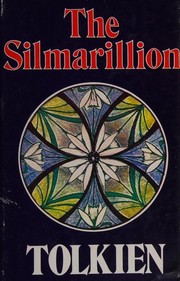 The SilmarillionJ.R.R. TolkienA sweeping, biblical tapestry of creation, hubris, and the tragic fading of a magical world.
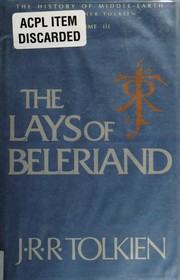 The Lays of BeleriandChristopher TolkienA scholarly and poetic immersion into the tragic, grand-scale origins of a legendary fantasy world.
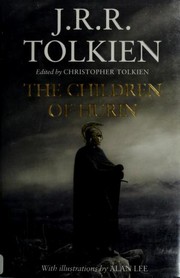 The Children of HúrinJohn Ronald Reuel TolkienA mythic, dread-soaked tragedy of doomed heroes fighting an inescapable curse in the darkest age of a beloved fantasy world.
 The Lord of the RingsJohn Ronald Reuel TolkienA sweeping, elegiac journey that balances the cozy comforts of home with the terrifying, mythic weight of saving the world.
 Unfinished Tales of Númenor and Middle-earthJ.R.R. TolkienA scholarly and mythic excavation into the lost histories and forgotten corners of a beloved fantasy realm.
 The Atlas of Middle-earthKaren Wynn FonstadA meticulous, cartographic love letter that transforms a beloved fantasy world into a tangible, explorable landscape.