Books › The Lays of Beleriand
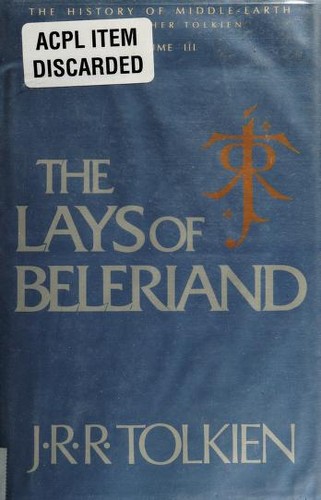
The Lays of Beleriand
First published 1985 · 480 pages
A scholarly and poetic immersion into the tragic, grand-scale origins of a legendary fantasy world.
What it feels like
Reading this volume feels like stepping into a dimly lit archive filled with the foundational texts of a fully realized world. It is a leisurely, scholarly journey that blends meticulous textual criticism with the sweeping, rhythmic cadence of ancient English meter and rhyming verse. The mood is deeply mythic and often somber, carrying the heavy emotional weight of grand tragedies and subterranean encounters with dark forces. Rather than a traditional narrative, the experience is one of witnessing the evolution of a legendarium, watching fragments and unfinished lays slowly build the architecture of an epic universe. It will profoundly delight devoted readers and linguistic enthusiasts who crave the deep, poetic roots of classic fantasy.
- Mood
- ancient
- mythic
- somber
- majestic
- Tone
- scholarly
- epic
- tragic
- reverent
- Pace
- leisurely
- Themes
- the evolution of myth · tragic destiny · heroic quests · the weight of ancient legends
- The writing
- A blend of meticulous textual criticism and grand, rhythmic alliterative verse and rhyming poetry.
- The arc
- Moves from the scholarly appreciation of fragmented history into the immersive tragedy and grand scale of ancient myth.
- Who it's for
- Devoted fans of classic fantasy and scholars of poetry who delight in the linguistic and historical evolution of a legendary world.
Content notes
- tragic death of a friend
- violence
About the book
This is the third volume of the History of Middle-earth, which comprises here-tofore unpublished manuscripts that were written over a period of many years before Tolkien's Simlarillion was published. Volumes 1 and 2 were the Book of Lost Tales, Part One and The Book of Lost Tales, Part Two. Together, these volumes encompass an extraordinarily extensive body of material ornamenting and buttressing what must be the most fully realized world ever to spring from a single author's imagination. "I write alliterative verse with pleasure," wrote J.R.R. Tolkien in 1955, "though I have published little beyond the fragments in The Lord of the Rings, except The Homecoming of Beorhtnoth." The first of the poems in The Lays of Beleriand is the previously unpublished Lay of the Children of Hurin, his early but most sustained work in the ancient English meter, intended to narrate on a grand scale the tragedy of Turin Turambar. It was account of the killing by Turin of his friend Beleg, as well as a unique description of the great redoubt of Nargothrond. The Lay of the Children of Hurin was supplanted by the Lay of Leithian, "Release from Bondage", in which another major legend of the Elder Days received poetic form, in this case in rhyme. The chief source of the short prose tale of Beren and Luthien is The Silmarillion. This, too, was not completed, but the whole Quest of the Silmaril is told, and the poem breaks off only after the encounter with Morgoth in his subterranean fortress. Many years later, when The Lord of the rings was finished, J.R.R. Tolkien returned to the Lay of Leithian and started on a new version, which is also given in this book. Accompanying the poems are commentaries on the evolution of the history of the Elder Days, which was much developed during the years of the composition of the two Lays. Also included is the notable criticism in detail of the Lay of Lethian by C.S. Lewis, Tolkien's friend and colleague, who read the poem in 1929. By assuming that this poem is actually a fragment from a past lost in history, Lewis underlined the remarkable power of its author's imaginative talents and academic competence.
Description from Open Library.
Books like The Lays of Beleriand
See why they match Morgoth's RingJ.R.R. Tolkien and Christopher TolkienA scholarly and deeply philosophical descent into the ancient, shadowed roots of a beloved mythology, exploring the very nature of mortality and pervasive evil.
 Beren and LúthienJ.R.R. TolkienA scholarly and deeply romantic excavation of a foundational myth, blending high-fantasy verse with the fascinating evolution of a legend.
 The Children of HúrinJohn Ronald Reuel TolkienA mythic, dread-soaked tragedy of doomed heroes fighting an inescapable curse in the darkest age of a beloved fantasy world.
![Cover of The Book of Lost Tales [1/2]](https://covers.openlibrary.org/b/id/9293488-M.jpg) The Book of Lost Tales [1/2]Christopher TolkienA dreamy, fireside journey into the raw, archaic blueprints of a legendary mythology.
The Book of Lost Tales [1/2]Christopher TolkienA dreamy, fireside journey into the raw, archaic blueprints of a legendary mythology. Tree and LeafJohn Ronald Reuel TolkienA quiet, autumnal meditation on the sacred act of storytelling and the bittersweet limits of human creation.
 The Atlas of Middle-earthKaren Wynn FonstadA meticulous, cartographic love letter that transforms a beloved fantasy world into a tangible, explorable landscape.