Books › Motor learning
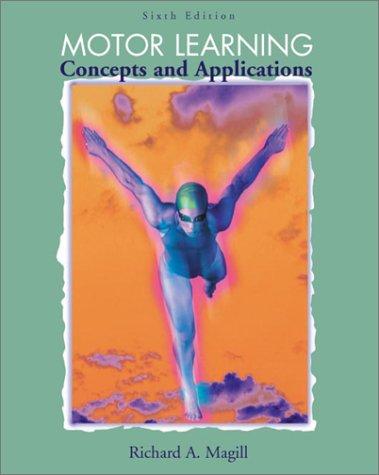
Motor learning
First published 1980 · 544 pages
A grounded, analytical deep dive into the mechanics of how humans learn to move, play, and perform.
What it feels like
Reading this book feels like stepping into a brightly lit kinesiology classroom, where the everyday miracles of human movement are broken down into clear, observable mechanics. The pace is steady and methodical, reflecting its nature as an instructional text designed to build foundational knowledge. There is a deeply pragmatic and analytical mood that permeates the pages, stripping away the mystery of a dancer's grace or a baseball player's throw to reveal the structured behavioral science beneath. The prose is objective and academic, focused entirely on clarity and education rather than narrative flair. It is a deeply satisfying read for physical educators, students of human behavior, or anyone who wants to understand the complex, invisible processes that allow us to walk, play the piano, or operate machinery.
- Mood
- analytical
- focused
- pragmatic
- Tone
- informative
- academic
- objective
- instructive
- Pace
- steady
- Themes
- human movement · skill acquisition · physical education · behavioral mechanics
- The writing
- Clear, methodical, and textbook-oriented, prioritizing instructional clarity over stylistic flourish.
- The arc
- A steady intellectual journey from observing everyday physical actions to grasping the underlying mechanics of human learning.
- Who it's for
- Students of physical education, teachers, and readers fascinated by the science of how the human body learns to perform complex tasks.
Content notes
- mentions of artificial limbs
About the book
When people run, walk with an artificial limb, throw a baseball, hit a tennis ball, play the piano, dance, or operate a wood lathe, they are engaged in the performance of a type of human behavior called motor skills.
Description from Open Library.
Books like Motor learning
See why they match Adapted physical activity, recreation, and sportClaudine SherrillAn empathetic, instructional guide that normalizes physical struggle while teaching inclusive strategies for adapted recreation.
 The principles of learning and behaviorMichael DomjanA rigorous, foundational journey into the mechanics of how creatures acquire knowledge and adapt their actions.
 Applied behavior analysisJohn O. CooperA rigorous, encyclopedic deep dive into the mechanics of human behavior and the empirical science of learning.
 Foundations of physical educationBucher, Charles AugustusA methodical, mid-century deep dive into the pedagogical roots of physical training and education.
 Social Foundations of Thought and ActionAlbert BanduraA rigorous, paradigm-shifting exploration of how our minds, behaviors, and environments continuously shape one another.
 Physiology of sport and exerciseJack H. Wilmore and W. Larry KenneyA comprehensive, scientifically rigorous deep dive into the miraculous machinery of the human body in motion.