Books › Social Foundations of Thought and Action

Social Foundations of Thought and Action
First published 1985 · 617 pages
A rigorous, paradigm-shifting exploration of how our minds, behaviors, and environments continuously shape one another.
What it feels like
Reading this foundational text feels like being handed the architectural blueprints of the human mind. It is a deeply intellectual and structured experience, demanding a steady, deliberate pace as you navigate its dense, scholarly prose. The atmosphere is one of rigorous academic inquiry, devoid of fluff but rich in paradigm-shifting insights. As you progress through its comprehensive frameworks, a subtle but powerful sense of empowerment emerges from its core message: that humans are not just products of their environment, but active agents capable of self-regulation and profound change. It will deeply satisfy psychology students, behavioral researchers, and anyone willing to invest the mental energy required to understand the intricate dance between cognition, behavior, and society.
- Mood
- intellectual
- contemplative
- structured
- Tone
- authoritative
- analytical
- objective
- scholarly
- Pace
- steady
- Themes
- human agency · self-efficacy · reciprocal determinism · behavioral change · social learning
- The writing
- The prose is dense, academic, and highly precise, requiring slow and deliberate reading to unpack its complex theoretical models.
- The arc
- The reader moves from grappling with complex theoretical frameworks to experiencing a profound appreciation for human agency and our capacity for self-directed change.
- Who it's for
- Psychology scholars, behavioral scientists, and deeply curious readers who want to understand the fundamental mechanics of human motivation and social learning.
About the book
Presents a comprehensive theory of human motivation and action from a social-cognitive perspective. This insightful text addresses the prominent roles played by cognitive, vicarious, self-regulatory, and self-reflective processes in psychosocial functioning; emphasizes reciprocal causation through the interplay of cognitive, behavioral, and environmental factors; and systematically applies the basic principles of this theory to personal and social change.--
Description from Open Library.
Books like Social Foundations of Thought and Action
See why they match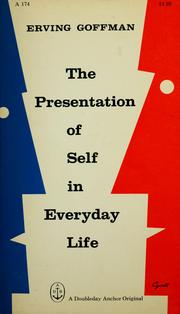 The presentation of self in everyday lifeErving GoffmanA fascinating, slightly unsettling lens that permanently alters how you view every conversation, meeting, and social encounter.
 The social animalElliot AronsonA fascinating, narrative-driven journey into the hidden social forces that dictate human behavior.
 Social psychologyH. Andrew MichenerA structured, comprehensive journey into the mechanics of human interaction and the unseen forces of group behavior.
 Social learning and clinical psychologyJulian B. RotterA rigorous, foundational exploration of mid-century clinical psychology and social learning theory.
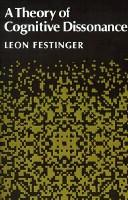 A Theory of Cognitive DissonanceLéon FestingerA foundational, paradigm-shifting exploration of the mental gymnastics we perform to keep our beliefs intact.
 Cognitive psychologyRobert L. SolsoA rigorous, methodical journey through the architecture and mechanics of the human mind.