Books › My Promised Land

My Promised Land
445 pages
A sweeping, deeply conflicted personal and historical reckoning with the triumphs and tragedies of a nation's soul.
What it feels like
Reading this book feels like sitting with a deeply conflicted, incredibly articulate historian as they wrestle with the ghosts of their own heritage. The pace is steady and deliberate, demanding your full attention as it weaves intimate family lore with sweeping, often painful national history. It is steeped in a mood of profound existential anxiety and somber reflection, never settling for easy answers or comfortable narratives. The prose is both journalistic in its rigor and lyrical in its emotional resonance, capturing the agonizing moral ambiguities of state-building and displacement. It will deeply satisfy readers who crave nuanced, emotionally intelligent explorations of complex geopolitical realities, offering a reading experience that is as intellectually rigorous as it is heartbreakingly personal.
- Mood
- somber
- contemplative
- fraught
- historically weighty
- Tone
- earnest
- reflective
- conflicted
- urgent
- journalistic
- Pace
- steady
- Themes
- the weight of history · moral ambiguity · national identity · existential anxiety · generational legacy
- The writing
- Journalistic yet lyrical, blending sweeping historical narrative with intimate, emotionally charged personal reflection.
- The arc
- Moves from hopeful, idealistic beginnings through the agonizing moral compromises of state-building, landing in a state of profound, unresolved existential anxiety.
- Who it's for
- Readers seeking a nuanced, deeply felt, and historically grounded exploration of complex geopolitical realities that doesn't shy away from painful contradictions.
Content notes
- war
- displacement
- ethnic violence
- trauma
- Holocaust references
About the book
Not since Thomas L. Friedman’s groundbreaking From Beirut to Jerusalem has a book captured the essence and the beating heart of the Middle East as keenly and dynamically as My Promised Land. Facing unprecedented internal and external pressures, Israel today is at a moment of existential crisis. Ari Shavit draws on interviews, historical documents, private diaries, and letters, as well as his own family’s story, illuminating the pivotal moments of the Zionist century to tell a riveting narrative that is larger than the sum of its parts: both personal and national, both deeply human and of profound historical dimension.
We meet Shavit’s great-grandfather, a British Zionist who in 1897 visited the Holy Land on a Thomas Cook tour and understood that it was the way of the future for his people; the idealist young farmer who bought land from his Arab neighbor in the 1920s to grow the Jaffa oranges that would create Palestine’s booming economy; the visionary youth group leader who, in the 1940s, transformed Masada from the neglected ruins of an extremist sect into a powerful symbol for Zionism; the Palestinian who as a young man in 1948 was driven with his family from his home during the expulsion from Lydda; the immigrant orphans of Europe’s Holocaust, who took on menial work and focused on raising their children to become the leaders of the new state; the pragmatic engineer who was instrumental in developing Israel’s nuclear program in the 1960s, in the only interview he ever gave; the zealous religious Zionists who started the settler movement in the 1970s; the dot-com entrepreneurs and young men and women behind Tel-Aviv’s booming club scene; and today’s architects of Israel’s foreign policy with Iran, whose nuclear threat looms ominously over the tiny country.
As it examines the complexities and contradictions of the Israeli condition, My Promised Land asks difficult but important questions: Why did Israel come to be? How did it come to be? Can Israel survive? Culminating with an analysis of the issues and threats that Israel is currently facing, My Promised Land uses the defining events of the past to shed new light on the present. The result is a landmark portrait of a small, vibrant country living on the edge, whose identity and presence play a crucial role in today’s global political landscape.
Description from Open Library.
Books like My Promised Land
See why they match The Hundred Years' War on PalestineRashid KhalidiA sobering, meticulously researched blend of personal memoir and sweeping history that reframes a century of conflict through the lens of the displaced.
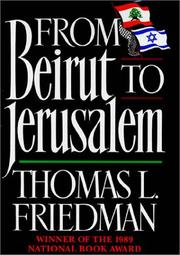 From Beirut to JerusalemThomas FriedmanA front-row seat to the chaotic, deeply human, and historically entrenched conflicts of the Middle East.
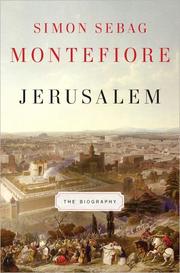 JerusalemSimon Sebag-MontefioreA sweeping, blood-soaked, and awe-inspiring journey through three millennia of faith, fanaticism, and empire.
 A Promised LandBarack ObamaAn elegant, deeply introspective look behind the curtain of power, balancing the soaring hope of a movement with the heavy, grinding realities of the Oval Office.
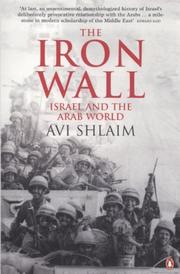 The Iron WallAvi ShlaimA rigorous, unflinching dismantling of historical mythology that leaves the reader with a profound sense of the tragic complexities of statecraft.
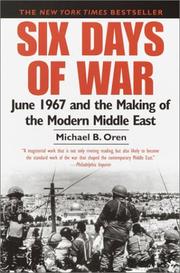 Six Days of WarMichael B. OrenA gripping, minute-by-minute plunge into a geopolitical powder keg that reads with the breathless urgency of a political thriller.