Books › Narrenschiff
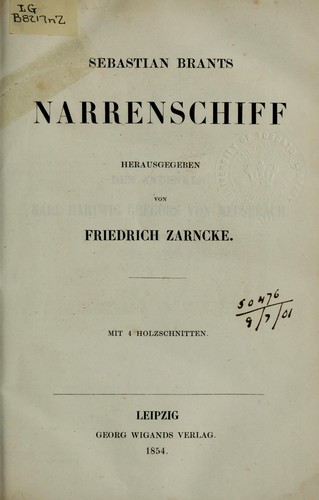
Narrenschiff
842 pages
An archaic, multilingual verse exploration of human foolishness, preserved from the early sixteenth century.
What it feels like
Reading this early sixteenth-century text feels like stepping into a quiet antiquarian archive. The experience is inherently scholarly and leisurely, inviting the reader to pore over archaic English and Latin verse translated by a Tudor-era priest. It is a deeply historical encounter, steeped in the moralizing and didactic tones of early modern literature as it contemplates the timeless theme of human folly. The presence of woodcut illustrations and the multilingual nature of the text add a rich, textural layer to the reading experience. This is a work that will delight bibliophiles, historians, and anyone fascinated by the preservation of early printed books and the enduring nature of historical satire.
- Mood
- archaic
- contemplative
- historical
- Tone
- didactic
- antiquarian
- moralizing
- scholarly
- Pace
- leisurely
- Themes
- human folly · moral instruction · antiquarian preservation · multilingual translation
- The writing
- The text is presented in archaic, multilingual verse, blending Latin and early English alongside historical woodcut illustrations.
- The arc
- The reader moves through a structured, historical contemplation of human foolishness, guided by early modern moralizing verse.
- Who it's for
- Bibliophiles and scholars of early modern literature who delight in historical translations and antiquarian texts.
About the book
By Sebastian Brant, whose name appears on a1r.
A translation of: Narrenschiff.
Text in Latin and English; the Latin version is by Jacob Locher.
Caption title, a1r. The first leaf recto bears a woodcut coat of arms; at foot of verso: This present boke named the Shyp of folys of the worlde was translated i[n] the College of saynt mary Otery in the counte of Deuonshyre: out of Laten, Frenche, and Doche into Englysshe tonge by Alexander Barclay preste: and at that tyme chaplen in the sayde College. tra[n]slated the yere of our Lorde god. M.CCCCC.viii. Inprentyd in the cyte of London in Fletestre [sic] at the signe of Saynt George by Rycharde Pynson to hys coste and charge: ended the yere of our Sauiour M.d.ix. the. xiiii. day of December.
Printer's name and address from colophon.
Numerous errors in foliation.
Reproduction of the original in the British Library.
Available electronically as part of Early English books online.
Microfilm. Ann Arbor, Mich.: UMI, 1938. 1 microfilm reel; 35 mm. (Early English books, 1475-1640; 27:08).
Description from Open Library.
Books like Narrenschiff
See why they match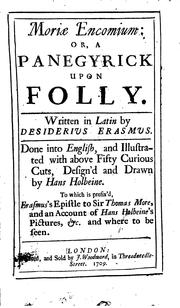 Moriæ EncomiumDesiderius ErasmusA brilliantly ironic oration that skewers human arrogance and celebrates the liberating power of absurdity.
 Ars AmatoriaOvidA cheeky, sophisticated masterclass in the timeless and theatrical art of Roman seduction.
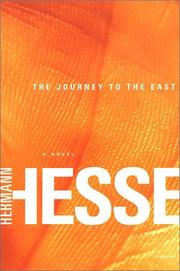 MorgenlandfahrtHermann HesseA surreal, quiet pilgrimage into the depths of the soul, where the true destination is the dissolution of the ego.
 Maria StuartJ Friedrich Von SchillerA majestic, tension-filled tragedy of two queens locked in a fatal battle of wills, where political duty collides with personal desire.
 The works of HoraceHoraceA timeless invitation to pour a glass of wine, retreat to the countryside, and ponder the fleeting, beautiful nature of a well-lived life.
 FaustJohann Wolfgang von GoetheA tempestuous, poetic descent into the intoxicating and tragic depths of human ambition and demonic temptation.