Books › Nature's numbers
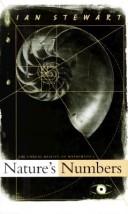
Nature's numbers
First published 1995 · 192 pages
An illuminating journey that equips you with a new lens to see the hidden rhythms and secret structures of the natural world.
What it feels like
Reading this book feels like putting on a pair of magic glasses that suddenly reveal the hidden architecture of the universe. The steady, accessible pacing guides you through a landscape where abstract mental constructs become tangible tools for understanding reality. The tone is enthusiastic and deeply analytical, relying on vivid metaphors like comparing math to a Beethoven symphony or Sherlock Holmes to translate complex ideas into moments of pure wonder. It cultivates an illuminating, intellectually curious mood, transforming everyday sights like snowflakes and clouds into profound mysteries waiting to be decoded. It is a perfect fit for inquisitive readers who want to experience the awe of discovering the deep, mathematical regularities that quietly govern the world around them.
- Mood
- intellectual
- curious
- illuminating
- wondrous
- Tone
- enthusiastic
- analytical
- accessible
- awe-struck
- Pace
- steady
- Themes
- hidden patterns in nature · the power of abstraction · mathematical beauty · decoding the universe
- The writing
- Clear and highly metaphorical, using vivid analogies to translate complex mental constructs into accessible concepts.
- The arc
- Moves from everyday curiosity to a profound sense of awe at the hidden regularities governing the world.
- Who it's for
- Curious thinkers who want to understand the deep, structural beauty of the natural world without needing a background in complex equations.
About the book
"Mathematics is, Ian Stewart admits, totally unreal - an entirely mental construct. Furthermore, the complicated equations and lengthy proofs we usually identify as math are no more the essence of math than a musical score is a Beethoven symphony. Yet math is the best tool we have for understanding the world around us. By looking at the universe through mathematical eyes, we have discovered a great secret: nature's patterns are clues to the deep regularities that govern the way the world works." "Mathematics is to nature as Sherlock Holmes is to evidence. It can look at a single snowflake and deduce the atomic structure of ice crystals; it can start with a violin string and uncover the existence of radio waves. And mathematics still has the power to open our eyes to new and unsuspected regularities: the secret structure of a cloud or the hidden rhythms of the weather." "Nature's Numbers will equip you with a mathematician's eyes. It will take you sight-seeing in a mathematical universe. And it will change the way you view your own world."--Jacket.
Includes bibliographical references (p. 151-154) and index.
Description from Open Library.
Books like Nature's numbers
See why they match Is God a mathematician?Mario LivioA contemplative journey through history and logic that asks whether the universe is fundamentally built on numbers.
 MathematicsTimothy GowersA patient, mind-expanding glimpse into the elegant, abstract world of advanced mathematics.
 In Pursuit of the UnknownIan StewartA fascinating, accessible tour through the invisible mathematical scaffolding that holds up our modern world.
 Just Six NumbersMartin ReesAn awe-inspiring exploration of the fundamental constants that make existence possible, from the smallest atoms to the vastness of the cosmos.
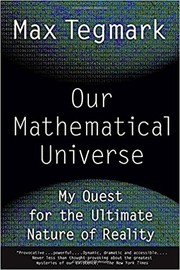 Our Mathematical UniverseMax TegmarkA dizzying, enthusiastic plunge into the radical idea that the cosmos isn't just described by math, but is made of it.
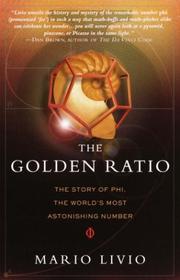 The Golden RatioMario LivioAn awe-inspiring journey through the hidden mathematical pattern that connects sunflower florets, Renaissance masterpieces, and the shape of the galaxy.