Books › Normal Accidents

Normal Accidents
Living with High-Risk Technologies
548 pages
A sobering, analytical look at how complex, tightly coupled systems make catastrophic failures an inevitable part of modern life.
What it feels like
Reading this book feels like putting on a pair of X-ray glasses that reveal the hidden, fragile architecture of the modern world. It maintains a steady, methodical pace as it dismantles the comforting illusion that catastrophic accidents are mere anomalies or simple operator errors. Instead, the atmosphere is deeply sobering and intellectual, steeping the reader in the unsettling reality of tightly coupled, complex systems where tiny, trivial failures unpredictably cascade into massive disasters. The prose is analytical and clear, guiding the reader through the mechanics of risk and organizational failure without sensationalism. It is a compelling, cautionary experience tailored for systems thinkers, engineers, and anyone fascinated by the inevitable vulnerabilities built into our highest-risk technologies.
- Mood
- sobering
- apprehensive
- intellectual
- Tone
- analytical
- cautionary
- objective
- serious
- Pace
- steady
- Themes
- inevitability of failure · systemic complexity · cascading consequences · organizational risk
- The writing
- Clear, methodical, and structurally focused, breaking down complex interactions into understandable principles.
- The arc
- Moves from a baseline understanding of isolated errors to a sobering realization of systemic, unavoidable vulnerabilities.
- Who it's for
- Readers fascinated by systems thinking, risk management, and the hidden fragilities of modern technology.
Content notes
- industrial accidents
- catastrophic events
About the book
"Normal" accidents, or system accidents, are so-called by Perrow because such accidents are inevitable in extremely complex systems. Given the characteristic of the system involved, multiple failures which interact with each other will occur, despite efforts to avoid them. Perrow said that operator error is a very common problem, many failures relate to organizations rather than technology, and big accidents almost always have very small beginnings. Such events appear trivial to begin with before unpredictably cascading through the system to create a large event with severe consequences.
Perrow identifies three conditions that make a system likely to be susceptible to Normal Accidents. These are: - The system is complex - The system is tightly coupled - The system has catastrophic potential
Description from Open Library.
Books like Normal Accidents
See why they match To engineer is humanHenry PetroskiA fascinating, forgiving look at how our greatest technological triumphs are built on a foundation of spectacular mistakes.
 Human CompatibleStuart RussellA sobering yet ultimately constructive intellectual journey into the greatest existential challenge of our time.
 Diffusion of innovationsEverett M. RogersA foundational, deeply analytical exploration of how and why new ideas take root in human societies.
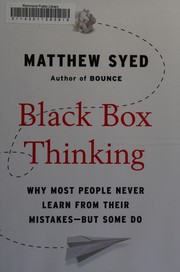 Black box thinkingMatthew SyedA paradigm-shifting exploration of why we hide our mistakes and how embracing them is the only true path to innovation.
 Technically WrongSara Wachter-BoettcherA sharp, validating wake-up call that pulls back the curtain on the biases baked into our everyday digital lives.
 The Innovator's DilemmaClayton M. ChristensenA paradigm-shifting masterclass that systematically dismantles everything you thought you knew about corporate success and survival.