Books › The Innovator's Dilemma
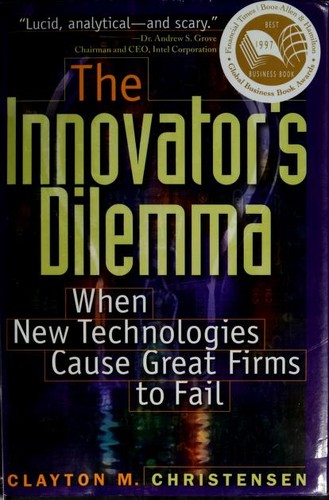
The Innovator's Dilemma
First published 1997 · 336 pages
A paradigm-shifting masterclass that systematically dismantles everything you thought you knew about corporate success and survival.
What it feels like
Reading this book feels like sitting in on a masterclass that systematically dismantles your deepest assumptions about success. It is a steady, methodical read, grounded in clear-eyed analysis and historical case studies that build a quiet but undeniable sense of urgency. The prose is academic yet highly accessible, trading flashy jargon for rigorous, paradigm-shifting logic. As you move through the chapters, the initial comfort of established business wisdom gives way to a bracing realization of vulnerability—the terrifying paradox that doing everything right can actually lead to ruin. It is an intellectual awakening designed for strategists, founders, and curious minds who want to peer around the corners of industry and understand the hidden forces of disruption.
- Mood
- intellectual
- pragmatic
- contemplative
- urgent
- Tone
- analytical
- authoritative
- cautionary
- insightful
- objective
- Pace
- steady
- Themes
- the paradox of success · disruptive innovation · corporate mortality · strategic foresight · adapting to change
- The writing
- Clear, methodical, and academic yet accessible, relying on rigorous case studies rather than flashy jargon.
- The arc
- Moves from the comfort of established wisdom to a bracing realization of vulnerability, culminating in a pragmatic sense of empowerment.
- Who it's for
- Founders, strategists, and business leaders eager to understand the hidden forces that topple industry giants.
About the book
In his book, The Innovator's Dilemma [3], Professor Clayton Christensen of Harvard Business School describes a theory about how large, outstanding firms can fail "by doing everything right." The Innovator's Dilemma, according to Christensen, describes companies whose successes and capabilities can actually become obstacles in the face of changing markets and technologies.
This book takes the radical position that great companies can fail precisely because they do everything right. It demonstrates why outstanding companies that had their competitive antennae up, listened astutely to customers, and invested aggressively in new technologies still lost their market leadership when confronted with disruptive changes in technology and market structure. And it tells how to avoid a similar fate. Using the lessons of successes and failures of leading companies, The Innovator's Dilemma presents a set of rules for capitalizing on the phenomenon of disruptive innovation. These principles will help managers determine when it is right not to listen to customers, when to invest in developing lower-performance products that promise lower margins, and when to pursue small markets at the expense of seemingly larger and more lucrative ones. - Jacket flap.
Description from Open Library.
Books like The Innovator's Dilemma
See why they match The Innovator's SolutionClayton M. ChristensenA focused, analytical guide that transforms the abstract challenge of business growth into a structured, actionable framework.
 Crossing the ChasmGeoffrey A. MooreA clear-eyed, strategic masterclass that transforms the chaotic anxiety of scaling a startup into a methodical, solvable puzzle.
 Good to GreatJim CollinsA methodical, research-backed roadmap that transforms the daunting challenge of organizational excellence into a series of disciplined, actionable steps.
 Innovation and EntrepreneurshipPeter F. DruckerA masterclass in stripping the magic away from innovation to reveal the rigorous, repeatable discipline underneath.
 Only the paranoid surviveAndrew S. GroveA high-stakes masterclass in turning corporate anxiety into a razor-sharp competitive advantage.
 The Lean StartupEric RiesA pragmatic, energizing blueprint for navigating the chaos of innovation with scientific precision.