Books › Political Ideologies

Political Ideologies
An Introduction
First published 1992 · 432 pages
A clarifying, structured map of the ideas that have shaped human governance and societal conflict.
What it feels like
Reading this book feels like sitting in a well-lit lecture hall with a brilliant, unbiased professor who can finally make sense of the world's ideological chaos. The experience is deeply clarifying, organizing the noisy spectrum of political discourse into neat, understandable categories without ever oversimplifying the historical nuances. The pace is steady and methodical, allowing the reader to comfortably digest complex philosophical frameworks from classical liberalism to fascism and ecologism. Its prose is a model of academic accessibility, prioritizing clear definitions and objective analysis over rhetorical flourish. It is an intellectually satisfying journey that replaces the anxiety of modern punditry with calm, structured understanding, delighting students and curious citizens who want to grasp the foundational ideas driving global societies.
- Mood
- intellectual
- clarifying
- structured
- academic
- Tone
- objective
- analytical
- accessible
- authoritative
- balanced
- Pace
- steady
- Themes
- the spectrum of belief · power and society · evolution of political thought · ideological frameworks
- The writing
- Clear, methodical, and highly structured, prioritizing accessibility and objective analysis over rhetorical flourish.
- The arc
- Moves from a state of conceptual confusion to a structured, nuanced understanding of global political thought.
- Who it's for
- Students of political science, curious citizens, and anyone seeking a foundational, unbiased map of the political spectrum.
Content notes
- discussions of extremism
- historical political violence
About the book
"Peter Atkins presents a detailed investigation into the nature of Nebuchadnezzar's animalising affliction in Daniel 4 and the degree to which he is depicted as actually becoming an animal. Atkins examines typical explanations of this which seem to have followed two predominant lines of interpretation: either Nebuchadnezzar undergoes a physical metamorphosis of some kind into an animal form; or diverse other readings that specifically preclude or deny an animal transformation of the king. By providing an extensive examination of this division of interpretative opinion, alongside innovative assessments of the narrative's textual history and ancient Mesopotamian divine-human-animal boundaries, Atkins ultimately demonstrates how neither of these traditional interpretations best reflect the narrative events. While there have been numerous metamorphic interpretations of Daniel 4, such readings are largely reliant upon later developments within the textual tradition and are not present in the earliest edition of Nebuchadnezzar's animalising affliction. However it is equally inadequate to state that the king does not undergo an animal transformation at all as, through Nebuchadnezzar's loss of reason, Daniel 4 describes a more subtle yet much more profound crossing of the human-animal boundary. When Daniel 4 is read in the context of Mesopotamian texts, which appear to conceive of the human-animal boundary as being indicated primarily in relation to possession or lack of the divine characteristic of wisdom, the affliction represents a far more significant categorical change from human to animal than has hitherto been identified"--
Description from Open Library.
Books like Political Ideologies
See why they match Political theoryAndrew HeywoodA clarifying, accessible journey through the complex ideas that govern human societies and shape our political reality.
 The End of History and the Last ManFrancis FukuyamaA sweeping, mountaintop view of human civilization that leaves you wrestling with the quiet anxiety of what happens after we win the ideological war.
 The Parasitic MindGad SaadA combative, unapologetic manifesto that diagnoses modern cultural trends as viruses of the mind, urging a return to reason.
 Understanding politicsThomas M. MagstadtA structured, academic exploration of the ideas and institutions that shape governance.
 The unseen realmMichael S. HeiserA paradigm-shifting deep dive that re-enchants familiar texts by pulling back the curtain on an ancient, supernatural worldview.
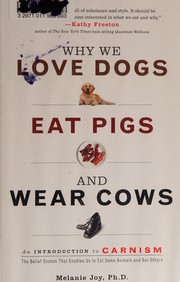 Why we love dogs, eat pigs, and wear cowsMelanie JoyA paradigm-shifting exploration of the invisible belief systems that shape our most basic daily choices.